Skip to product information
1 of 1

Palgrave MacMillan

Asymmetric Demography and the Global Economy: Growth Opportunities and Macroeconomic Challenges in an Ageing World

Asymmetric Demography and the Global Economy: Growth Opportunities and Macroeconomic Challenges in an Ageing World

Regular price €164,95 EUR
Regular price Sale price €164,95 EUR
Sale Sold out
Shipping calculated at checkout.
Format
Quantity
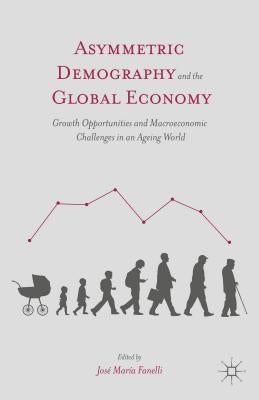
The global demographic transition presents marked asymmetries as poor, emerging, and advanced countries are undergoing different stages of transition. Emerging countries are demographically younger than advanced economies. This youth is favorable to growth and generates a demographic dividend. However, the future of emerging economies will bring a decline in the working-age share and a rise in the older population, as is the case in today's developed world. Hence, developing countries must get rich before getting old, while advanced economies must try not to become poorer as they age. Asymmetric Demography and the Global Economy contributes to our understanding of why this demographic transition matters to the domestic macroeconomics and global capital movements affect the asset accumulation, growth potential, current account, and the economy's international investment position. This collaborative collection approaches these questions from the perspective of "systemically important" emerging countries i.e., members of the G20 but considers both the national and the global sides of the problem.

Author: J. Fanelli
Publisher: Palgrave MacMillan
Published: 03/05/2015
Pages: 293
Binding Type: Hardcover
Weight: 1.25lbs
Size: 9.30h x 6.00w x 0.90d
ISBN: 9781137486455

About the Author
Ramiro Albrieu, University of Buenos Aires, Argentina Melvin Ayogu, Mapungubwe Institute for Strategic Reflection, South Africa Ricardo D. Brito, INSPER Institute of Education and Research, Brazil Richard N. Cooper, Harvard University, USA Pranab Kumar Das, Centre for Studies in Social Sciences, Calcutta, India Cai Fang, Chinese Academy of Social Sciences Saibal Kar, Centre for Studies in Social Sciences, Calcutta, India José Antonio Ocampo, Columbia University, USA Olumide Taiwo, Centre for the Study of the Economies of Africa, Nigeria Carlos Viana de Varvalho, Pontifical Catholic University of Rio de Janeiro, Brazil Harry X. Wu, Hitotsubashi University, Japan Du Yang, Chinese Academy of Social Sciences

View full details