1
/
of
1
Cambridge University Press
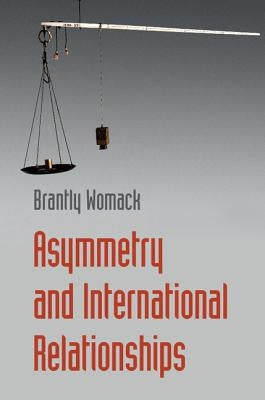
Asymmetry and International Relationships
Asymmetry and International Relationships
Regular price
€43,95 EUR
Regular price
Sale price
€43,95 EUR
Shipping calculated at checkout.
Quantity
Couldn't load pickup availability
Power is real, but it does not always prevail. This book explores how disparity structures international relationships. Beginning at the bilateral level, the relationship between the smaller side and the larger side can be normal as long as the smaller does not feel threatened and the larger can assume that its capabilities are respected. However, the smaller can be tempted to brinksmanship, while the larger can be tempted to bully. Asymmetric conflicts are often stalemated because the limited commitment of the larger side is met by the smaller's mortal resistance. In multilateral situations, asymmetry shapes patterns of uncertainty and attention. In global systems, how hegemons treat their subjects is the unobserved sand shifting beneath their feet as they look toward their challenger. Since 2008, the US has retained primacy but not dominance. The management of asymmetric relationships in a multinodal world will determine how power matters in the current era.
Author: Brantly Womack
Publisher: Cambridge University Press
Published: 12/17/2015
Pages: 260
Binding Type: Paperback
Weight: 0.79lbs
Size: 9.06h x 6.01w x 0.61d
ISBN: 9781107589537
Author: Brantly Womack
Publisher: Cambridge University Press
Published: 12/17/2015
Pages: 260
Binding Type: Paperback
Weight: 0.79lbs
Size: 9.06h x 6.01w x 0.61d
ISBN: 9781107589537
About the Author
Womack, Brantly: - Brantly Womack holds the C. K. Yen Chair at the Miller Center and is Professor of Foreign Affairs at the University of Virginia. His research focuses on Chinese politics and international relationships in East Asia. His most recent books include China and Vietnam: The Politics of Asymmetry (2006), China among Unequals (2010), and China's Rise in Historical Perspective (2010). He has worked closely with universities and research institutes in China, Vietnam, and Taiwan and was given the China Friendship Award in 2011.
Share