1
/
of
1
Oxford University Press (UK)
Brain as a Tool: A Neuroscientist's Account
Brain as a Tool: A Neuroscientist's Account
Regular price
€139,95 EUR
Regular price
Sale price
€139,95 EUR
Shipping calculated at checkout.
Quantity
Couldn't load pickup availability
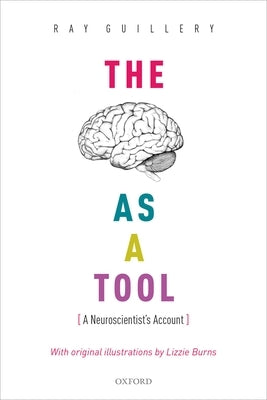
There are two distinct views about the functions of our brains and their origins. The standard view, taught in most neuroscience texts, has incoming messages about the world sent to the cerebral cortex, with the cortex then producing an appropriate motor output. The interactive view, largely expressed by philosophers and psychologists, stresses the continuous sensorimotor interactions of the brain with the world. The Brain as a Tool focuses on thalamo-cortical interactions on the basis of the interactive view, exploring the phylogenetically new transthalamic corticocortical pathways of mammals that link a hierarchy of cortical areas to each other and back to the phylogenetically older motor centres for control of action. The book demonstrates how messages in these pathways produce an anticipation of our own actions and perceptions. In relating neural events to conscious processing and our sense of self, Guillery summarizes important evidence which links neuroscience with psychology and philosophy. This book is essential reading for neuroscientists, cognitive psychologists and philosophers. Supplemented with a helpful glossary of neural terms and numerous illustrations of the brain, it is also an important resource for graduate and postdoctoral students interested in the neural bases of a sense of self and of cognitive functions.
Author: Ray Guillery
Publisher: Oxford University Press (UK)
Published: 11/14/2017
Pages: 282
Binding Type: Hardcover
Weight: 1.24lbs
Size: 9.30h x 6.20w x 1.00d
ISBN: 9780198806738
Author: Ray Guillery
Publisher: Oxford University Press (UK)
Published: 11/14/2017
Pages: 282
Binding Type: Hardcover
Weight: 1.24lbs
Size: 9.30h x 6.20w x 1.00d
ISBN: 9780198806738
About the Author
Ray Guillery, Honorary Emeritus Research Fellow, MRC Brain Network Dynamics Unit, University of Oxford
Share