1
/
of
1
University of Pittsburgh Press
Cleansing the Czechoslovak Borderlands: Migration, Environment, and Health in the Former Sudetenland
Cleansing the Czechoslovak Borderlands: Migration, Environment, and Health in the Former Sudetenland
Regular price
€32,95 EUR
Regular price
Sale price
€32,95 EUR
Shipping calculated at checkout.
Quantity
Couldn't load pickup availability
In this innovative study of the aftermath of ethnic cleansing, Eagle Glassheim examines the transformation of Czechoslovakia's Sudetenland from the end of the Second World War, through the Cold War, and into the twenty-first century.
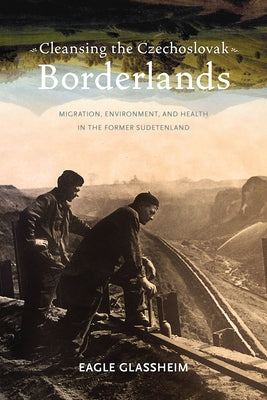
Prior to their expulsion in 1945, ethnic Germans had inhabited the Sudeten borderlands for hundreds of years, with deeply rooted local cultures and close, if sometimes tense, ties with Bohemia's Czech majority. Cynically, if largely willingly, harnessed by Hitler in 1938 to his pursuit of a Greater Germany, the Sudetenland's three million Germans became the focus of Czech authorities in their retributive efforts to remove an alien ethnic element from the body politic-and claim the spoils of this coal-rich, industrialized area. Yet, as Glassheim reveals, socialist efforts to create a modern utopia in the newly resettled "frontier" territories proved exceedingly difficult. Many borderland regions remained sparsely populated, peppered with dilapidated and abandoned houses, and hobbled by decaying infrastructure. In the more densely populated northern districts, coalmines, chemical works, and power plants scarred the land and spewed toxic gases into the air. What once was a diverse religious, cultural, economic, and linguistic "contact zone," became, according to many observers, a scarred wasteland, both physically and psychologically.
Glassheim offers new perspectives on the struggles of reclaiming ethnically cleansed lands in light of utopian dreams and dystopian realities-brought on by the uprooting of cultures, the loss of communities, and the industrial degradation of a once-thriving region. To Glassheim, the lessons drawn from the Sudetenland speak to the deep social traumas and environmental pathologies wrought by both ethnic cleansing and state-sponsored modernization processes that accelerated across Europe as a result of the great wars of the twentieth century.
Author: Eagle Glassheim
Publisher: University of Pittsburgh Press
Published: 11/18/2016
Pages: 288
Binding Type: Paperback
Weight: 1.10lbs
Size: 9.00h x 6.00w x 0.80d
ISBN: 9780822964261
Review Citation(s):
Choice 05/01/2017
Prior to their expulsion in 1945, ethnic Germans had inhabited the Sudeten borderlands for hundreds of years, with deeply rooted local cultures and close, if sometimes tense, ties with Bohemia's Czech majority. Cynically, if largely willingly, harnessed by Hitler in 1938 to his pursuit of a Greater Germany, the Sudetenland's three million Germans became the focus of Czech authorities in their retributive efforts to remove an alien ethnic element from the body politic-and claim the spoils of this coal-rich, industrialized area. Yet, as Glassheim reveals, socialist efforts to create a modern utopia in the newly resettled "frontier" territories proved exceedingly difficult. Many borderland regions remained sparsely populated, peppered with dilapidated and abandoned houses, and hobbled by decaying infrastructure. In the more densely populated northern districts, coalmines, chemical works, and power plants scarred the land and spewed toxic gases into the air. What once was a diverse religious, cultural, economic, and linguistic "contact zone," became, according to many observers, a scarred wasteland, both physically and psychologically.
Glassheim offers new perspectives on the struggles of reclaiming ethnically cleansed lands in light of utopian dreams and dystopian realities-brought on by the uprooting of cultures, the loss of communities, and the industrial degradation of a once-thriving region. To Glassheim, the lessons drawn from the Sudetenland speak to the deep social traumas and environmental pathologies wrought by both ethnic cleansing and state-sponsored modernization processes that accelerated across Europe as a result of the great wars of the twentieth century.
Author: Eagle Glassheim
Publisher: University of Pittsburgh Press
Published: 11/18/2016
Pages: 288
Binding Type: Paperback
Weight: 1.10lbs
Size: 9.00h x 6.00w x 0.80d
ISBN: 9780822964261
Review Citation(s):
Choice 05/01/2017
About the Author
Eagle Glassheim is professor of history at the University of British Columbia. He is the author of Noble Nationalists: The Transformation of the Bohemian Aristocracy.
Share