Euclid Avenue Press
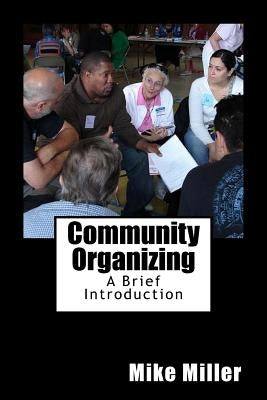
Community Organizing: A Brief Introduction
Community Organizing: A Brief Introduction
Couldn't load pickup availability
In the approach described here, civic and religious institutions come together to give the community a collective voice. Organizers help a community build a powerful organization rooted in core values of democracy and the social justice teachings of the world's great religious traditions.
Saul Alinsky developed the foundations of the tradition of organizing described here, an approach that remains dominant in the U.S. today. Alinsky rooted power deeply in the lives, relationships and institutions of marginalized and oppressed people. In his early organizing days, his organizations brought together a wide range of institutions: religious congregations and labor unions, as well as mutual aid, self-help, athletic, sororal and fraternal, neighborhood and other voluntary associations. By the late 1970s, as non-congregational neighborhood associations fell into decline, organizers in the Alinsky tradition started looking more carefully at how to sustain the vibrancy of the religious institutions that remained. Organizers sought to help congregation members become co-creators, rather than consumers, of the life of their churches, and worked to help members connect their faith more directly to action in the world. In this way, they helped make both faith and the action more meaningful.
This little book tells the story of one congregation that was a member of a "broadly-based community organization," and how a community organizer assisted its development as a true community.
Author: Mike Miller
Publisher: Euclid Avenue Press
Published: 04/06/2012
Pages: 64
Binding Type: Paperback
Weight: 0.22lbs
Size: 9.00h x 6.00w x 0.13d
ISBN: 9780615623214
About the Author
Mike Miller is Executive Director of ORGANIZE Training Center and has 50 years of experience in the field of community organizing as a lead organizer, consultant, workshop leader, teacher, writer, trainer and initiator of new projects. He is the founding Executive Director of OTC, which is nationally recognized for its work in the field. He has published articles on or related to organizing in Christianity & Crisis, Organizing, The Organizer, Social Policy, Socialist Review, Generations, Religion & Race Reports, The Ark, New Conversations, Z Magazine, The Living Pulpit, International Journal of Urban Planning & Research and the Poverty & Race Research and Action Report, and has taught community organizing and urban politics at Stanford, University of California, Notre Dame, San Francisco State, Hayward State and Lone Mountain.
This title is not returnable
Share