1
/
of
1
Language Science Press
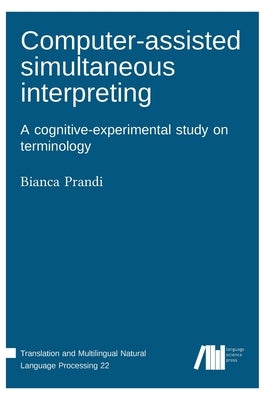
Computer-assisted simultaneous interpreting
Computer-assisted simultaneous interpreting
Regular price
€69,95 EUR
Regular price
Sale price
€69,95 EUR
Shipping calculated at checkout.
Quantity
Couldn't load pickup availability
The present work explores computer-assisted simultaneous interpreting (CASI) from a primarily cognitive perspective. Despite concerns over the potentially negative impact of computer-assisted interpreting (CAI) tools on interpreters' cognitive load (CL), this hypothesis has thus far remained untested. Furthermore, previous research has been restricted to the evaluation of the CASI product. Hence, a methodology for the process-oriented evaluation of CASI and the empirical evidence for its cognitive modelling were missing. Overcoming these limitations appears essential to advance CAI research, particularly to foster a deeper understanding of the cognitive aspects of CAI through a validated research methodology and to determine the feasibility of the integration of CAI tools into the interpreting process. Therefore, this dissertation tested and empirically validated a methodology for the combined exploration of the product and process of CASI. Quantitative and qualitative data were collected during an eyetracking experiment at the Translation & Cognition Center of the University of Mainz. The study followed a convergent mixed-method and multi-method approach and involved nine MA advanced interpreting students. Prior to the experimental task, the informants were trained in the use of the three terminology support tools compared during the experiment, i. e. a digital glossary in PDF format, a CAI tool with manual look-up and a mock-up CAI tool with integrated automatic speech recognition (ASR) for terminology. After several pre-tests, the participants interpreted three speeches from English into their native German using a different tool each time. To increase comparability between the three conditions and control for potentially confounding variables, the speeches prepared ad-hoc for data collection were validated during a pilot study. The students' gaze data and deliveries were recorded and analysed. Qualitative data on the informants' perception of the tools were coll
Author: Bianca Prandi
Publisher: Language Science Press
Published: 01/19/2023
Pages: 326
Binding Type: Hardcover
Weight: 1.58lbs
Size: 9.61h x 6.69w x 0.75d
ISBN: 9783985540556
Author: Bianca Prandi
Publisher: Language Science Press
Published: 01/19/2023
Pages: 326
Binding Type: Hardcover
Weight: 1.58lbs
Size: 9.61h x 6.69w x 0.75d
ISBN: 9783985540556
This title is not returnable
Share