1
/
of
1
OUP Us
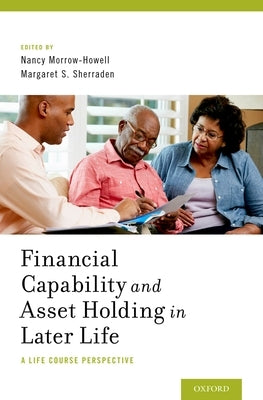
Financial Capability and Asset Holding in Later Life: A Life Course Perspective
Financial Capability and Asset Holding in Later Life: A Life Course Perspective
Regular price
€104,95 EUR
Regular price
Sale price
€104,95 EUR
Shipping calculated at checkout.
Quantity
Couldn't load pickup availability
With today's availability of Social Security and Medicare, we typically think of the older years as a stage in life where people are supported financially. However, of the more than 40 million old adults currently living in the US, many are struggling financially living below or near the
poverty line. They are lacking the assets necessary to see them through a period of life that is often longer than expected and that requires more health and long-term care. While financial vulnerability can be most pronounced in old age, it is often created across decades, revealing itself in later
years when there is little opportunity to reverse a lifetime of disadvantage. The concept of Financial Capability refers to both an individual and structural idea that combines a person's ability to act with their opportunity to act in their best financial interests. In Financial Capability and Asset Holding in Later Life: A Life Course Perspective the concept of Financial Capability is used to underscore the importance of acquiring knowledge and skills while addressing policies and services than can build financial security. The volume assembles the latest
evidence on financial capability and assets among older adults using a life course perspective, arguing that older adults need financial knowledge and financial services in order to build secure lives, and that this process needs to begin before it is too late to make effective changes and choices. Broken into three parts, the book's chapters - written by leading experts in the field - blend together empirical findings, economic and social theory, and case studies. Part 1 opens the book with a conceptual and empirical overview of financial capability and assets among older adults using a life
course perspective. Part 2 presents chapters addressing financial vulnerability of diverse racial and ethnic groups, people with disabilities, and immigrants. Part 3 includes chapters describing current policies, programs, and innovations, including a review of important issues of working and
caregiving in later life, and a detailed assessment of age-friendly banking principles, banking products, services, and policies.
Author: Nancy Morrow-Howell
Publisher: OUP Us
Published: 01/27/2015
Pages: 280
Binding Type: Hardcover
Weight: 1.15lbs
Size: 9.30h x 6.10w x 0.70d
ISBN: 9780199374304
poverty line. They are lacking the assets necessary to see them through a period of life that is often longer than expected and that requires more health and long-term care. While financial vulnerability can be most pronounced in old age, it is often created across decades, revealing itself in later
years when there is little opportunity to reverse a lifetime of disadvantage. The concept of Financial Capability refers to both an individual and structural idea that combines a person's ability to act with their opportunity to act in their best financial interests. In Financial Capability and Asset Holding in Later Life: A Life Course Perspective the concept of Financial Capability is used to underscore the importance of acquiring knowledge and skills while addressing policies and services than can build financial security. The volume assembles the latest
evidence on financial capability and assets among older adults using a life course perspective, arguing that older adults need financial knowledge and financial services in order to build secure lives, and that this process needs to begin before it is too late to make effective changes and choices. Broken into three parts, the book's chapters - written by leading experts in the field - blend together empirical findings, economic and social theory, and case studies. Part 1 opens the book with a conceptual and empirical overview of financial capability and assets among older adults using a life
course perspective. Part 2 presents chapters addressing financial vulnerability of diverse racial and ethnic groups, people with disabilities, and immigrants. Part 3 includes chapters describing current policies, programs, and innovations, including a review of important issues of working and
caregiving in later life, and a detailed assessment of age-friendly banking principles, banking products, services, and policies.
Author: Nancy Morrow-Howell
Publisher: OUP Us
Published: 01/27/2015
Pages: 280
Binding Type: Hardcover
Weight: 1.15lbs
Size: 9.30h x 6.10w x 0.70d
ISBN: 9780199374304
About the Author
Margaret Sherrard Sherraden, PhD, is Professor, School of Social Work, University of Missouri-St. Louis, and Research Professor, Center for Social Development (CSD), Washington University in St. Louis.
This title is not returnable
Share