Skip to product information
1 of 1

Palgrave MacMillan

Forensic Economics: Assessing Personal Damages in Civil Litigation

Forensic Economics: Assessing Personal Damages in Civil Litigation

Regular price €277,95 EUR
Regular price Sale price €277,95 EUR
Sale Sold out
Shipping calculated at checkout.
Format
Quantity
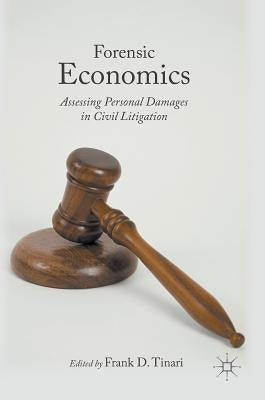
This book is an introduction to the emerging field of forensic economics, or how civil litigation determines financial compensation. Economic damages or losses are claimed within a wide array of civil law cases. Civil law is subdivided into sub-fields such as death and injury, breach of contract, lost profits, employment discrimination, and the like. Each of these types of cases is governed both by legislated rules (statutes) and the findings of case law. Numerous differences in methods and scope form the legal landscape from state to state. In federal and state courts in the United States, as well as in other nations, when one party sues another based on allegations that harm was done as a result of the actions of the other party, the suing party is required not only to prove that the harm was, indeed, caused by the other party, but also to claim and demonstrate that a specified dollar value represents just compensation for the harm. Aimed at both practitioners and theorists, the original articles and essays in the edited collection are written by nationally recognized and widely published forensic experts. Its strength is in showcasing theories, methods and measurements as they differ in a variety of cases and will exposes forensic economists to a wide range of situations. While forensic economists would not typically be involved in the proof-of-causation stage of a litigated matter, they are often called upon to evaluate, measure and opine on the degree of economic loss that is alleged to have occurred. In addition, the volume will show how economists must become thoroughly familiar with the accepted methods and sources in the field as developed in the forensic economics literature. Just as important is the ability to apply one's trade in an ethical and professional manner. Finally, the solo practitioner must acquire skills in operating a small business. The book would be of great interest to practicing economic damages experts includes CPAs who do damages calculations. It would also be of interest to law firms who specialize in litigation and provide a practical guide of the legal parameters that guide the methods and measurements of economic loss. - - - -

Author: Frank D. Tinari
Publisher: Palgrave MacMillan
Published: 12/07/2016
Pages: 327
Binding Type: Hardcover
Weight: 1.30lbs
Size: 8.40h x 6.00w x 0.90d
ISBN: 9781137571090

About the Author
Frank D. Tinari is Professor Emeritus of Economics at Seton Hall University, USA, where he taught for 31 years. He is the author of a college economics textbook and dozens of peer-reviewed articles in the Journal of Forensic Economics, Journal of Legal Economics, Journal of Economic Education, Eastern Economic Journal, and others. He founded the Tinari Economics consultancy and has served as Principal Economist of the Sobel Tinari Economics Group. Tinari has written thousands of economic loss appraisals and testified as an expert witness in over 1,000 cases in several states, as well as in dozens of cases before the Special Master of the 911 Victim Compensation Fund. He served on the Board of the National Association of Forensic Economics and was its President from 2005 to 2006.
Contributors
Gary R. Albrecht, Albrecht Economics, USAMichael L. Brookshire, Marshall University, USAJames E. Ciecka, DePaul University, USAJoshua Congdon-Hohman, College of the Holy Cross, USAStephen M. Horner, Economic Consulting, USA
Thomas R. Ireland, University of Missouri-St. Louis, USADavid D. Jones, Economic Consulting Services, LLC, USAKurt V. Krueger, John Ward Economics, USATimothy Lanning, Formuzis, Pickersgill & Hunt, Inc., USAVictor A. Matheson, College of the Holy Cross, USAJames D. Rodgers, Pennsylvania State University, USAThomas Roney, Thomas Roney, LLC, USADavid Rosenbaum, University of Nebraska-Lincoln, USADavid Schap, College of the Holy Cross, USAGary R. Skoog, Legal Econometrics, Inc.Frank Slesnick, Bellarmine University, USALawrence M. Spizman, State University of New York at Oswego, USAJohn O. Ward, University of Missouri-Kansas City, USA

View full details