1
/
of
1
Cambridge University Press
How Mass Atrocities End: Studies from Guatemala, Burundi, Indonesia, the Sudans, Bosnia-Herzegovina, and Iraq
How Mass Atrocities End: Studies from Guatemala, Burundi, Indonesia, the Sudans, Bosnia-Herzegovina, and Iraq
Regular price
€45,95 EUR
Regular price
Sale price
€45,95 EUR
Shipping calculated at checkout.
Quantity
Couldn't load pickup availability
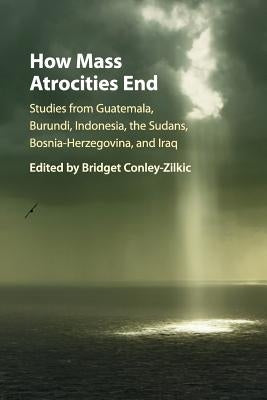
Given the brutality of mass atrocities, it is no wonder that one question dominates research and policy: what can we, who are not at risk, do to prevent such violence and hasten endings? But this question skips a more fundamental question for understanding the trajectory of violence: how do mass atrocities actually end? This volume presents an analysis of the processes, decisions, and factors that help bring about the end of mass atrocities. It includes qualitatively rich case studies from Burundi, Guatemala, Indonesia, Sudan, Bosnia, and Iraq, drawing patterns from wide-ranging data. As such, it offers a much needed correction to the popular 'salvation narrative' framing mass atrocity in terms of good and evil. The nuanced, multidisciplinary approach followed here represents not only an essential tool for scholars, but an important step forward in improving civilian protection.
Author: Bridget Conley-Zilkic
Publisher: Cambridge University Press
Published: 05/11/2017
Pages: 242
Binding Type: Paperback
Weight: 0.73lbs
Size: 9.00h x 6.00w x 0.51d
ISBN: 9781107561649
Author: Bridget Conley-Zilkic
Publisher: Cambridge University Press
Published: 05/11/2017
Pages: 242
Binding Type: Paperback
Weight: 0.73lbs
Size: 9.00h x 6.00w x 0.51d
ISBN: 9781107561649
About the Author
Conley-Zilkic, Bridget: - Bridget Conley-Zilkic is Research Director of World Peace Foundation, where she currently leads research on the How Mass Atrocities End project. She is also an Assistant Research Professor at The Fletcher School, Tufts University, Massachusetts. Professor Conley-Zilkic has published multiple essays on mass atrocity prevention and response, and on the potential for museums to engage human rights issues. She received a Ph.D. in Comparative Literature from State University of New York, Binghamton in 2001.
Share