Skip to product information
1 of 1

Cambridge University Press

Mao's Cultural Army: Drama Troupes in China's Rural Revolution

Mao's Cultural Army: Drama Troupes in China's Rural Revolution

Regular price €43,95 EUR
Regular price Sale price €43,95 EUR
Sale Sold out
Shipping calculated at checkout.
Format
Quantity
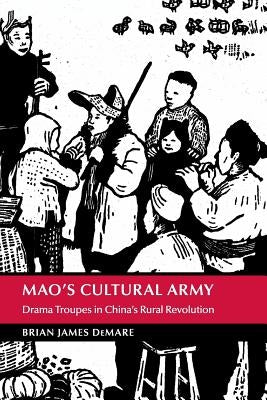
Charting their training, travels, and performances, this innovative study explores the role of the artists that roamed the Chinese countryside in support of Mao's communist revolution. DeMare traces the development of Mao's 'cultural army' from its genesis in Red Army propaganda teams to its full development as a largely civilian force composed of amateur and professional drama troupes in the early years of the People's Republic of China (PRC). Drawing from memoirs, artistic handbooks, and rare archival sources, Mao's Cultural Army uncovers the arduous and complex process of creating revolutionary dramas that would appeal to China's all-important rural audiences. The Communists strived for a disciplined cultural army to promote party policies, but audiences often shunned modern and didactic shows, and instead clamoured for traditional works. DeMare illustrates how drama troupes, caught between the party and their audiences, did their best to resist the ever growing reach of the PRC state.

Author: Brian James Demare
Publisher: Cambridge University Press
Published: 06/01/2017
Pages: 269
Binding Type: Paperback
Weight: 0.80lbs
Size: 9.00h x 6.00w x 0.57d
ISBN: 9781107432222

About the Author
Demare, Brian James: - Brian James DeMare is an Assistant Professor in the Department of History, Tulane University, Louisiana, where he teaches courses on modern Chinese history. He has published articles in two of the top journals in the field, The China Journal and Modern Chinese Literature and Culture, and lived in China for five years. During that time, he conducted several research trips into the countryside, visiting archives and interviewing active drama troupes, and has ties with Chinese academics studying the countryside in Shanxi. One of his main research sites is Long Bow, well-known in the West due to William Hinton, who wrote Fanshen, about land reform in that village.

View full details