1
/
of
1
University of North Carolina Press
Myths of Venice: The Figuration of a State
Myths of Venice: The Figuration of a State
Regular price
€73,95 EUR
Regular price
Sale price
€73,95 EUR
Shipping calculated at checkout.
Quantity
Couldn't load pickup availability
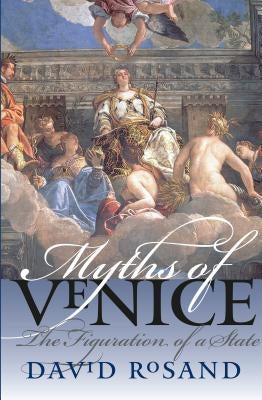
Over the course of several centuries, Venice fashioned and refined a portrait of itself that responded to and exploited historical circumstance. Never conquered and taking its enduring independence as a sign of divine favor, free of civil strife and proud of its internal stability, Venice broadcast the image of itself as the Most Serene Republic, an ideal state whose ruling patriciate were selflessly devoted to the commonweal. All this has come to be known as the "myth of Venice."
Exploring the imagery developed in Venice to represent the legends of its origins and legitimacy, David Rosand reveals how artists such as Gentile and Giovanni Bellini, Carpaccio, Titian, Jacopo Sansovino, Tintoretto, and Veronese gave enduring visual form to the myths of Venice. He argues that Venice, more than any other political entity of the early modern period, shaped the visual imagination of political thought. This visualization of political ideals, and its reciprocal effect on the civic imagination, is the larger theme of the book.
Never conquered and taking its enduring independence as a sign of divine favor, Venice broadcast an image of itself over the course of several centuries as the Most Serene Republic, an ideal state whose ruling patriciate were selflessly devoted to the commonweal. Exploring the imagery developed in Venice to represent the legends of its origins and legitimacy, David Rosand reveals how artists such as Gentile and Giovanni Bellini, Carpaccio, Titian, Jacopo Sansovino, Tintoretto, and Veronese gave enduring visual form to the myths of Venice. He argues that Venice, more than any other political entity of the early modern period, shaped the visual imagination of western political thought.
Author: David Rosand
Publisher: University of North Carolina Press
Published: 08/29/2005
Pages: 216
Binding Type: Paperback
Weight: 0.72lbs
Size: 9.06h x 6.00w x 0.52d
ISBN: 9780807856635
Exploring the imagery developed in Venice to represent the legends of its origins and legitimacy, David Rosand reveals how artists such as Gentile and Giovanni Bellini, Carpaccio, Titian, Jacopo Sansovino, Tintoretto, and Veronese gave enduring visual form to the myths of Venice. He argues that Venice, more than any other political entity of the early modern period, shaped the visual imagination of political thought. This visualization of political ideals, and its reciprocal effect on the civic imagination, is the larger theme of the book.
Never conquered and taking its enduring independence as a sign of divine favor, Venice broadcast an image of itself over the course of several centuries as the Most Serene Republic, an ideal state whose ruling patriciate were selflessly devoted to the commonweal. Exploring the imagery developed in Venice to represent the legends of its origins and legitimacy, David Rosand reveals how artists such as Gentile and Giovanni Bellini, Carpaccio, Titian, Jacopo Sansovino, Tintoretto, and Veronese gave enduring visual form to the myths of Venice. He argues that Venice, more than any other political entity of the early modern period, shaped the visual imagination of western political thought.
Author: David Rosand
Publisher: University of North Carolina Press
Published: 08/29/2005
Pages: 216
Binding Type: Paperback
Weight: 0.72lbs
Size: 9.06h x 6.00w x 0.52d
ISBN: 9780807856635
About the Author
Rosand, David: - David Rosand, Meyer Schapiro Professor of Art History at Columbia University, is well known for his studies of Venetian art. His books in that field include Titian; Painting in Sixteenth-Century Venice: Titian, Veronese, Tintoretto; and The Meaning of the Mark: Leonardo and Titian.
Share