1
/
of
1
Cambridge University Press
Power in Peacekeeping
Power in Peacekeeping
Regular price
€45,95 EUR
Regular price
Sale price
€45,95 EUR
Shipping calculated at checkout.
Quantity
Couldn't load pickup availability
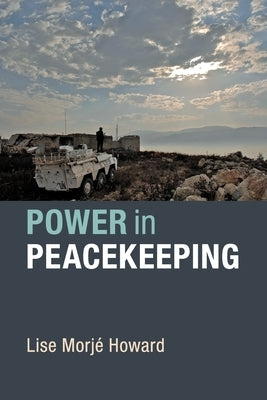
United Nations peacekeeping has proven remarkably effective at reducing the death and destruction of civil wars. But how peacekeepers achieve their ends remains under-explored. This book presents a typological theory of how peacekeepers exercise power. If power is the ability of A to get B to behave differently, peacekeepers convince the peacekept to stop fighting in three basic ways: they persuade verbally, induce financially, and coerce through deterrence, surveillance and arrest. Based on more than two decades of study, interviews with peacekeepers, unpublished records on Namibia, and ethnographic observation of peacekeepers in Lebanon, DR Congo, and the Central African Republic, this book explains how peacekeepers achieve their goals, and differentiates peacekeeping from its less effective cousin, counterinsurgency. It recommends a new international division of labor, whereby actual military forces hone their effective use of compulsion, while UN peacekeepers build on their strengths of persuasion, inducement, and coercion short of offensive force.
Author: Lise Morjé Howard
Publisher: Cambridge University Press
Published: 05/16/2019
Pages: 274
Binding Type: Paperback
Weight: 0.90lbs
Size: 9.00h x 8.30w x 0.60d
ISBN: 9781108457187
Author: Lise Morjé Howard
Publisher: Cambridge University Press
Published: 05/16/2019
Pages: 274
Binding Type: Paperback
Weight: 0.90lbs
Size: 9.00h x 8.30w x 0.60d
ISBN: 9781108457187
About the Author
Howard, Lise Morjé: - Lise Morjé Howard is an associate professor of Government at Georgetown University, Washington DC. Her work on peacekeeping, civil war termination, and US foreign policy has appeared in such journals as International Organization, International Security, International Studies Quarterly, and Foreign Affairs. Her book, UN Peacekeeping in Civil Wars (Cambridge, 2007) won the Best Book Award from the Friends of the Academic Council on the UN System.
Share