1
/
of
1
University of North Carolina Press
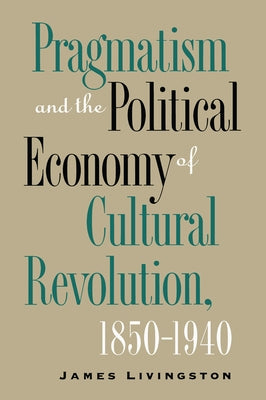
Pragmatism and the Political Economy of Cultural Revolution, 1850-1940
Pragmatism and the Political Economy of Cultural Revolution, 1850-1940
Regular price
€81,95 EUR
Regular price
Sale price
€81,95 EUR
Shipping calculated at checkout.
Quantity
Couldn't load pickup availability
The rise of corporate capitalism was a cultural revolution as well as an economic event, according to James Livingston. That revolution resides, he argues, in the fundamental reconstruction of selfhood, or subjectivity, that attends the advent of an 'age of surplus' under corporate auspices. From this standpoint, consumer culture represents a transition to a society in which identities as well as incomes are not necessarily derived from the possession of productive labor or property. From the same standpoint, pragmatism and literary naturalism become ways of accommodating the new forms of solidarity and subjectivity enabled by the emergence of corporate capitalism. So conceived, they become ways of articulating alternatives to modern, possessive individualism. Livingston argues accordingly that the flight from pragmatism led by Lewis Mumford was an attempt to refurbish a romantic version of modern, possessive individualism. This attempt still shapes our reading of pragmatism, Livingston claims, and will continue to do so until we understand that William James was not merely a well-meaning middleman between Charles Peirce and John Dewey and that James's pragmatism was both a working model of postmodern subjectivity and a novel critique of capitalism.
Author: James Livingston
Publisher: University of North Carolina Press
Published: 09/15/1997
Pages: 424
Binding Type: Paperback
Weight: 1.35lbs
Size: 9.06h x 5.94w x 1.11d
ISBN: 9780807846643
Author: James Livingston
Publisher: University of North Carolina Press
Published: 09/15/1997
Pages: 424
Binding Type: Paperback
Weight: 1.35lbs
Size: 9.06h x 5.94w x 1.11d
ISBN: 9780807846643
About the Author
James Livingston, professor of history at Rutgers University, is author of Origins of the Federal Reserve System: Money, Class, and Corporate Capitalism, 1890-1913.
Share