Steiner Books
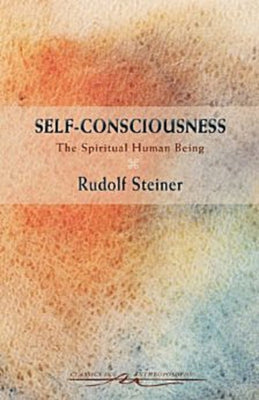
Self-Consciousness: The Spiritual Human Being (Cw 79)
Self-Consciousness: The Spiritual Human Being (Cw 79)
Couldn't load pickup availability
8 lectures, Oslo, November 25 - December 2, 1921 (CW 79)
The lectures in this book remain valid today for a world situation ever more desperate and in need of change based on spiritual-scientific knowledge. The need for developing "consciousness of the self as the spiritual essence of the free, individualistic, single-personality human being" is one of Steiner's unique contributions to the evolving history of humankind. This book marks a real milestone on that path.
Self-consciousness is a translation from German of Die Wirklichkeit der höhren Welten (GA 79).
Author: Rudolf Steiner
Publisher: Steiner Books
Published: 10/20/2010
Pages: 330
Binding Type: Paperback
Weight: 0.92lbs
Size: 8.50h x 5.50w x 0.74d
ISBN: 9780880106474
About the Author
Garber, Bernard J.: - Bernard J. Garber (1917-1992) was born in Passaic, New Jersey, and grew up in New York State, the oldest of three children. Although he did not finish college, he was a natural thinker and philosopher and, at the youthful age of twenty-four, led study groups on Rudolf Steiner's Philosophy of Freedom. He was dedicated to making Steiner's works available in English throughout North America and, in 1959, founded Rudolf Steiner Publications in New York City with Paul Marshall Allen. He published numerous volumes on Anthroposophy, as well as on other areas of Western spirituality, and, from 1960 to 1963, published the anthroposophic journal, Free Deeds. Later, he started Steinerbooks, an affiliate of Multimedia Publishing Corporation under the auspices of Rudolf Steiner Publications. He was also one of the founders of Green Meadow School in Chestnut Ridge, New York. Bernie Garber continued throughout his life to publish and promote the work of Rudolf Steiner.Steiner, Rudolf: - Rudolf Steiner (b. Rudolf Joseph Lorenz Steiner, 1861-1925) was born in the small village of Kraljevec, Austro-Hungarian Empire (now in Croatia), where he grew up. As a young man, he lived in Weimar and Berlin, where he became a well-published scientific, literary, and philosophical scholar, known especially for his work with Goethe's scientific writings. Steiner termed his spiritual philosophy anthroposophy, meaning "wisdom of the human being." As an exceptionally developed seer, he based his work on direct knowledge and perception of spiritual dimensions. He initiated a modern, universal "spiritual science" that is accessible to anyone willing to exercise clear and unbiased thinking. From his spiritual investigations, Steiner provided suggestions for the renewal of numerous activities, including education (general and for special needs), agriculture, medicine, economics, architecture, science, philosophy, Christianity, and the arts. There are currently thousands of schools, clinics, farms, and initiatives in other fields that involve practical work based on the principles Steiner developed. His many published works feature his research into the spiritual nature of human beings, the evolution of the world and humanity, and methods for personal development. He wrote some thirty books and delivered more than six thousand lectures throughout much of Europe. In 1924, Steiner founded the General Anthroposophical Society, which today has branches around the world.
Share