1
/
of
1
Academic
Suicide Prevent After Neurodisab AARP P
Suicide Prevent After Neurodisab AARP P
Regular price
€109,95 EUR
Regular price
Sale price
€109,95 EUR
Shipping calculated at checkout.
Quantity
Couldn't load pickup availability
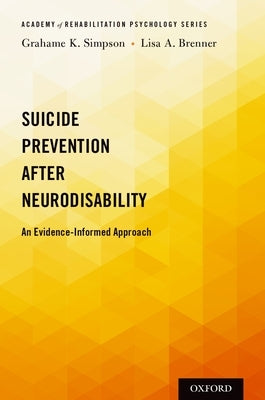
Suicide risk after disabling neurological conditions is up to five times higher than for the general population; however, knowledge about the extent of the problem, associated risk factors, and effective evidence-informed suicide prevention approaches are limited and fragmented. Suicide Prevention after Neurodisability focuses on the challenges faced by eight different types of neurodisability, namely stroke, spinal cord injury, traumatic brain injury, amyotrophic lateral sclerosis, epilepsy, Huntington's disease, multiple sclerosis, and Parkinson's disease. It pulls together the current knowledge about this risk, detailing a complex interplay between neuropathological, psychiatric, psychological, and psychosocial factors that in part account for this increased presence of suicidal thoughts and behaviors. Despite the challenges, suicide is often preventable. The best available evidence-informed approaches to suicide prevention in neurodisability are outlined, including clinical approaches to screening, suicide risk assessment, psychotherapeutic interventions, and psychosocial management. The reader-friendly approach will help make suicide prevention after neurodisability everyone's business.
Author: Brenner Simpson
Publisher: Academic
Published: 02/14/2019
Pages: 288
Binding Type: Paperback
Weight: 0.95lbs
Size: 9.10h x 6.10w x 0.70d
ISBN: 9780199928415
Author: Brenner Simpson
Publisher: Academic
Published: 02/14/2019
Pages: 288
Binding Type: Paperback
Weight: 0.95lbs
Size: 9.10h x 6.10w x 0.70d
ISBN: 9780199928415
About the Author
Grahame K. Simpson, PhD is an Associate Professor and has worked as a clinician and researcher for the past 30 years in the field of brain injury rehabilitation at Liverpool Hospital in Sydney, Australia. Over the last 2 decades, he has undertaken and published pioneering research into the epidemiology, psychological mechanisms and risk factors for elevated suicidal behaviors after traumatic brain injury, as well as trialing new psychological treatments for suicide prevention.
This title is not returnable
Share