Oxford University Press, USA
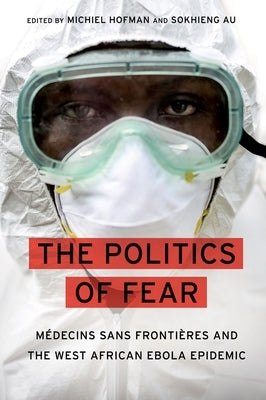
The Politics of Fear: Médecins Sans Frontières and the West African Ebola Epidemic
The Politics of Fear: Médecins Sans Frontières and the West African Ebola Epidemic
Couldn't load pickup availability
which in turn brought about a response that was as uneven as it was unprecedented: entire populations were decimated or destroyed, vaccine trials were fast-tracked, health staff died, untested medications were used (or not used) in controversial ways, humanitarian workers returned home to enforced
isolation, and military was employed to sometimes disturbing ends. The epidemic revealed serious fault lines at all levels of theory and practice of global public health: national governments were shown to be helpless and unprepared for calamity at this scale; the World Health Organization was roundly condemned for its ineffectiveness; the US quietly created its
own African CDC a year after the epidemic began. Amid such chaos, Médecins sans Frontières was forced to act with unprecdented autonomy -- and amid great criticism -- in responding to the disease, taking unprecedented steps in deploying services and advocating for international aid. The Politics of Fear provides a primary documentary resource for recounting and learning from the Ebola epidemic. Comprising eleven topic-based chapters and four eyewitness vignettes from both MSF- and non-MSF-affiliated contributors (all of whom have been given access to MSF Ebola archives from
Guinea, Sierra Leone, and Liberia for research), it aims to provide a politically agnostic account of the defining health event of the 21st century so far, one that will hopefully inform current opinions and future responses.
Author: Michiel Hofman
Publisher: Oxford University Press, USA
Published: 02/02/2017
Pages: 304
Binding Type: Hardcover
Weight: 1.19lbs
Size: 9.30h x 6.50w x 1.20d
ISBN: 9780190624477
About the Author
Michiel Hofman worked on MSF field missions between 1993 and 1998 as Emergency Coordinator and Head of Mission in Liberia, DRC, Bosnia, Burundi, Sri Lanka, Brazil, South Sudan, and Kosovo, returning to his other career as freelance journalist between missions. Between 1999 and 2001, he co-founded
the Antares Foundation, a Dutch non-profit organization that supports local NGOs in providing psycho-social support for staff working in high-stress environments. He returned to MSF in 2001 as Country Director in Russia, Operations Director in Amsterdam, and Country Director for Afghanistan. Since
2011 he has worked as senior humanitarian specialist for MSF based out of Belfast, concentrating on research, training, and operational support as well as publications in the humanitarian field.
Johns Hopkins Bloomberg School of Public Health.
Share