1
/
of
1
Cambridge University Press
The Revolution that Failed
The Revolution that Failed
Regular price
€76,95 EUR
Regular price
Sale price
€76,95 EUR
Shipping calculated at checkout.
Quantity
Couldn't load pickup availability
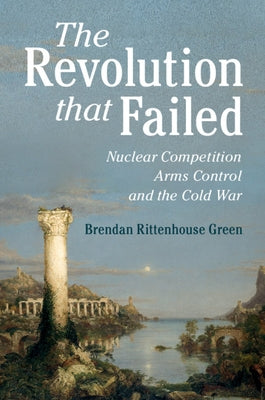
The study of nuclear weapons is dominated by a single theory - that of the nuclear revolution, or mutual assured destruction (MAD). Although such theorists largely perceive nuclear competition as irrational and destined for eventual stalemate, the nuclear arms race between superpowers during the second half of the Cold War is a glaring anomaly that flies in the face of this logic. In this detailed historical account, Brendan Green presents an alternate theoretical explanation for how the United States navigated nuclear stalemate during the Cold War. Motivated by the theoretical and empirical puzzles of the Cold War arms race, Green explores the technological, perceptual, and 'constitutional fitness' incentives that were the driving forces behind US nuclear competition. Green hypothesizes that states can gain peacetime benefits from effective nuclear competition, reducing the risk of crises, bolstering alliance cohesion, and more. He concludes that the lessons of the Cold War arms race remain relevant today: they will influence the coming era of great power competition and could potentially lead to an upsurge in future US government nuclear competition.
Author: Brendan Rittenhouse Green
Publisher: Cambridge University Press
Published: 03/05/2020
Pages: 290
Binding Type: Hardcover
Weight: 1.10lbs
Size: 9.20h x 6.40w x 0.80d
ISBN: 9781108489867
Author: Brendan Rittenhouse Green
Publisher: Cambridge University Press
Published: 03/05/2020
Pages: 290
Binding Type: Hardcover
Weight: 1.10lbs
Size: 9.20h x 6.40w x 0.80d
ISBN: 9781108489867
About the Author
Green, Brendan Rittenhouse: - Brendan Rittenhouse Green writes on issues of nuclear strategy, American foreign policy, and grand strategy. His scholarly articles have appeared in journals such as International Security and Security Studies, and have received awards from the Journal of Strategic Studies and the American Political Science Association.
Share