1
/
of
1
Cambridge University Press
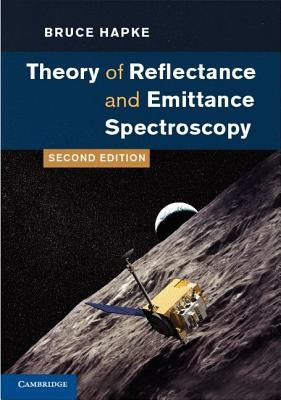
Theory of Reflectance and Emittance Spectroscopy
Theory of Reflectance and Emittance Spectroscopy
Regular price
€154,95 EUR
Regular price
Sale price
€154,95 EUR
Shipping calculated at checkout.
Quantity
Couldn't load pickup availability
Reflectance and emittance spectroscopy are increasingly important tools in remote sensing and have been employed in most recent planetary spacecraft missions. They are primarily used to measure properties of disordered materials, especially in the interpretation of remote observations of the surfaces of the Earth and other terrestrial planets. This book gives a quantitative treatment of the physics of the interaction of electromagnetic radiation with particulate media, such as powders and soils. Subjects covered include electromagnetic wave propagation, single particle scattering, diffuse reflectance, thermal emittance and polarisation. This new edition has been updated to include a quantitative treatment of the effects of porosity, a detailed discussion of the coherent backscatter opposition effect, a quantitative treatment of simultaneous transport of energy within the medium by conduction and radiation, and lists of relevant databases and software. This is an essential reference for research scientists, engineers and advanced students of planetary remote sensing.
Author: Bruce Hapke
Publisher: Cambridge University Press
Published: 01/19/2012
Pages: 528
Binding Type: Hardcover
Weight: 2.55lbs
Size: 9.70h x 7.00w x 1.10d
ISBN: 9780521883498
Author: Bruce Hapke
Publisher: Cambridge University Press
Published: 01/19/2012
Pages: 528
Binding Type: Hardcover
Weight: 2.55lbs
Size: 9.70h x 7.00w x 1.10d
ISBN: 9780521883498
About the Author
Hapke, Bruce: - Bruce Hapke is Professor Emeritus of Geology and Planetary Science at the University of Pittsburgh, where he continues to study various bodies of the solar system. He was principal investigator for the analysis of lunar samples and was associated with several other NASA missions, to Mercury, Mars, Saturn and the outer solar system. He is a Fellow of the American Geophysical Union and was awarded the Kuiper Prize by the Division for Planetary Sciences of the American Astronomical Society for 'outstanding contributions to planetary science'. He has an asteroid 3549 Hapke and a mineral Hapkeite named in his honour.
Share