1
/
of
1
Cambridge University Press
Violence, Kinship and the Early Chinese State: The Shang and Their World
Violence, Kinship and the Early Chinese State: The Shang and Their World
Regular price
€149,95 EUR
Regular price
Sale price
€149,95 EUR
Shipping calculated at checkout.
Quantity
Couldn't load pickup availability
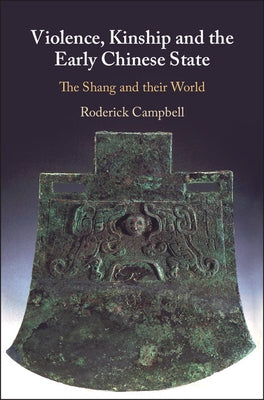
Situated between myth and history, the Shang has been hailed both as China's first historical dynasty and as one of the world's primary civilizations. This book is an up-to-date synthesis of the archaeological, palaeographic and transmitted textual evidence for the Shang polity at Anyang (c.1250-1050 BCE). Roderick Campbell argues that violence was not the antithesis of civilization at Shang Anyang, but rather its foundation in war and sacrifice. He explores the social economy of practices and beliefs that produced the ancestral order of the Shang polity. From the authority of posthumously deified kings, to the animalization of human sacrificial victims, the ancestral ritual complex structured the Shang world through its key institutions of war, sacrifice, and burial. Mediated by hierarchical lineages, participation in these practices was basic to being Shang. This volume, which is based on the most up-to-date evidence, offers comprehensive and cutting-edge insight into the Chinese Bronze Age civilization.
Author: Roderick Campbell
Publisher: Cambridge University Press
Published: 05/03/2018
Pages: 358
Binding Type: Hardcover
Weight: 1.58lbs
Size: 9.24h x 7.33w x 0.90d
ISBN: 9781107197619
Author: Roderick Campbell
Publisher: Cambridge University Press
Published: 05/03/2018
Pages: 358
Binding Type: Hardcover
Weight: 1.58lbs
Size: 9.24h x 7.33w x 0.90d
ISBN: 9781107197619
About the Author
Campbell, Roderick: - Roderick Campbell is Associate Professor of East Asian Archaeology and History at the Institute for the Study of the Ancient World, New York University. He has received numerous fellowships, awards, and grants for his work from institutions such as the Luce Archaeology Initiative, the Chiang Ching-kuo Foundation, and the Canadian Social Sciences and Humanities Research Council.
Share