Duke University Press
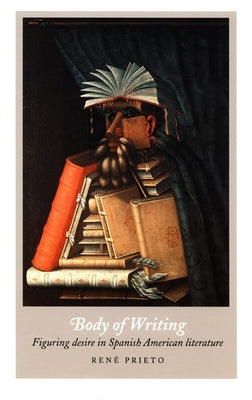
Body of Writing: Figuring Desire in Spanish American Literature
Body of Writing: Figuring Desire in Spanish American Literature
Couldn't load pickup availability
Healthy, invalid, lustful, and confined bodies-as portrayed by Julio Cort zar, Guillermo Cabrera Infante, Gabriel Garc a M rquez, Severo Sarduy, Rosario Castellanos, and Tununa Mercado-become evidence for Roland Barthes's contention that works of fiction are "anagrams of the body." Claiming that an author's intentions can be uncovered by analyzing "the topography of a text," Prieto pays particular attention not to the actions or plots of these writers' fiction but rather to their settings and characterizations. In the belief that bodily traces left on the page reveal the motivating force behind a writer's creative act, he explores such fictional themes as camouflage, deterioration, defilement, entrapment, and subordination. Along the way, Prieto reaches unexpected conclusions regarding topics that include the relationship of the female body to power, male and female transgressive impulses, and the connection between aggression, the idealization of women, and anal eroticism in men.
This study of how authors' longings and fears become embodied in literature will interest students and scholars of literary and psychoanalytic criticism, gender studies, and twentieth-century and Latin American literature.
Author: René Prieto
Publisher: Duke University Press
Published: 04/11/2000
Pages: 312
Binding Type: Paperback
Weight: 1.13lbs
Size: 9.25h x 5.91w x 0.92d
ISBN: 9780822324881
Review Citation(s):
Choice 12/01/2000 pg. 712
About the Author
René Prieto is Professor of Foreign Languages and Literature at Southern Methodist University. He is the author of Miguel Angel Asturias's Archaeology of Return.
Share