1
/
of
1
University of North Carolina Press
Civilizing Argentina: Science, Medicine, and the Modern State
Civilizing Argentina: Science, Medicine, and the Modern State
Regular price
$72.17 USD
Regular price
Sale price
$72.17 USD
Shipping calculated at checkout.
Quantity
Couldn't load pickup availability
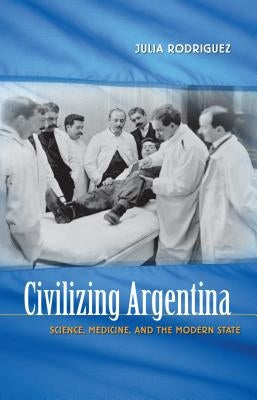
After a promising start as a prosperous and liberal democratic nation at the end of the nineteenth century, Argentina descended into instability and crisis. This stark reversal, in a country rich in natural resources and seemingly bursting with progress and energy, has puzzled many historians. In Civilizing Argentina, Julia Rodriguez takes a sharply contrary view, demonstrating that Argentina's turn of fortune is not a mystery but rather the ironic consequence of schemes to "civilize" the nation in the name of progressivism, health, science, and public order.
With new medical and scientific information arriving from Europe at the turn of the century, a powerful alliance developed among medical, scientific, and state authorities in Argentina. These elite forces promulgated a political culture based on a medical model that defined social problems such as poverty, vagrancy, crime, and street violence as illnesses to be treated through programs of social hygiene. They instituted programs to fingerprint immigrants, measure the bodies of prisoners, place wives who disobeyed their husbands in "houses of deposit," and exclude or expel people deemed socially undesirable, including groups such as labor organizers and prostitutes. Such policies, Rodriguez argues, led to the destruction of the nation's liberal ideals and opened the way to the antidemocratic, authoritarian governments that came later in the twentieth century.
Author: Julia Rodriguez
Publisher: University of North Carolina Press
Published: 02/01/2006
Pages: 320
Binding Type: Paperback
Weight: 1.04lbs
Size: 9.26h x 6.06w x 0.79d
ISBN: 9780807856697
Review Citation(s):
Multicultural Review 10/01/2006 pg. 76
With new medical and scientific information arriving from Europe at the turn of the century, a powerful alliance developed among medical, scientific, and state authorities in Argentina. These elite forces promulgated a political culture based on a medical model that defined social problems such as poverty, vagrancy, crime, and street violence as illnesses to be treated through programs of social hygiene. They instituted programs to fingerprint immigrants, measure the bodies of prisoners, place wives who disobeyed their husbands in "houses of deposit," and exclude or expel people deemed socially undesirable, including groups such as labor organizers and prostitutes. Such policies, Rodriguez argues, led to the destruction of the nation's liberal ideals and opened the way to the antidemocratic, authoritarian governments that came later in the twentieth century.
Author: Julia Rodriguez
Publisher: University of North Carolina Press
Published: 02/01/2006
Pages: 320
Binding Type: Paperback
Weight: 1.04lbs
Size: 9.26h x 6.06w x 0.79d
ISBN: 9780807856697
Review Citation(s):
Multicultural Review 10/01/2006 pg. 76
About the Author
Rodriguez, Julia: - Julia Rodriguez is associate professor of history and women's studies at the University of New Hampshire.
Share