1
/
of
1
Oxford University Press, USA
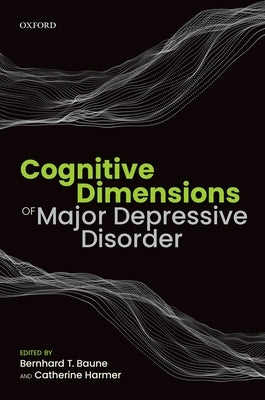
Cognitive Dimensions of Major Depressive Disorder
Cognitive Dimensions of Major Depressive Disorder
Regular price
$78.00 USD
Regular price
Sale price
$78.00 USD
Shipping calculated at checkout.
Quantity
Couldn't load pickup availability
Major depressive disorder (MDD) is one of the most prevalent mental disorders worldwide, and is estimated to affect 300 million people. Most research defines MDD as a categorical disorder and investigations on clinical, functional, and biological correlates are assessed by established
diagnostic instruments. However, given the phenotypic and biological heterogeneity of depression, a re-focus on the clinical phenotype of MDD is required. Bridging psychiatric and psychological traditions Cognitive Dimensions of Major Depressive Disorder, discusses the characteristics of the dimensional approach of MDD. Focusing on the cognitive and emotional processes of depression, this guide offers extended and novel diagnostic and treatment
approaches ranging from pharmacological to psychological interventions targeting dimensions of depression. Edited by pioneers in this field, this resource discusses hot topics such as how to define the dimensional approach to depression, the neurobiological underpinnings of cognitive dysfunction in depression, and the impairment of emotional processing deficits in depression. Cognitive Dimensions of Major Depressive Disorder is suitable for students, trainees, clinicians and scientists in the fields of psychology, neuropsychology, psychiatry, cognitive neuroscience, neurology, general practice and also for various other health care professionals.
Author: Bernhard T. Baune
Publisher: Oxford University Press, USA
Published: 10/01/2019
Pages: 320
Binding Type: Paperback
Weight: 1.15lbs
Size: 9.10h x 6.10w x 0.60d
ISBN: 9780198810940
The research of the group focuses on the psychological mechanisms of antidepressant drug action by exploring drug effects on human models of emotional processing. A range of methodologies are used, including neuropsychological testing, transcranial magnetic stimulation and functional neuroimaging with fMRI and PET in healthy volunteers and patient samples. This research has the potential to integrate psychological and pharmacological views of depression and treatment and has challenged the way in which we typically consider drug treatment for depression to work.
diagnostic instruments. However, given the phenotypic and biological heterogeneity of depression, a re-focus on the clinical phenotype of MDD is required. Bridging psychiatric and psychological traditions Cognitive Dimensions of Major Depressive Disorder, discusses the characteristics of the dimensional approach of MDD. Focusing on the cognitive and emotional processes of depression, this guide offers extended and novel diagnostic and treatment
approaches ranging from pharmacological to psychological interventions targeting dimensions of depression. Edited by pioneers in this field, this resource discusses hot topics such as how to define the dimensional approach to depression, the neurobiological underpinnings of cognitive dysfunction in depression, and the impairment of emotional processing deficits in depression. Cognitive Dimensions of Major Depressive Disorder is suitable for students, trainees, clinicians and scientists in the fields of psychology, neuropsychology, psychiatry, cognitive neuroscience, neurology, general practice and also for various other health care professionals.
Author: Bernhard T. Baune
Publisher: Oxford University Press, USA
Published: 10/01/2019
Pages: 320
Binding Type: Paperback
Weight: 1.15lbs
Size: 9.10h x 6.10w x 0.60d
ISBN: 9780198810940
About the Author
Bernhard T. Baune, Cato Chair and Head of Department of Psychiatry, Melbourne Medical School, The University of Adelaide, Catherine Harmer, Professor of Cognitive Neuroscience, Department of Psychiatry, University of Oxford, UK
The research of the group focuses on the psychological mechanisms of antidepressant drug action by exploring drug effects on human models of emotional processing. A range of methodologies are used, including neuropsychological testing, transcranial magnetic stimulation and functional neuroimaging with fMRI and PET in healthy volunteers and patient samples. This research has the potential to integrate psychological and pharmacological views of depression and treatment and has challenged the way in which we typically consider drug treatment for depression to work.
Share