1
/
of
1
Authorhouse
Commodities, Cash, and Clerics: Economic Priorities and Administrative Strategies in Nineteenth Century Utah
Commodities, Cash, and Clerics: Economic Priorities and Administrative Strategies in Nineteenth Century Utah
Regular price
$26.45 USD
Regular price
Sale price
$26.45 USD
Shipping calculated at checkout.
Quantity
Couldn't load pickup availability
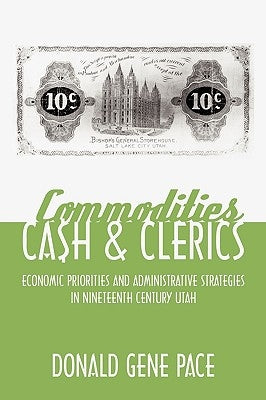
The massive movement of pioneer migrants into the Great American West has long captured the attention of writers. As with immigration to America generally, the prime motive for trans-Atlantic uprooting and settlement was economic. Yet there are major exceptions, such as John Winthrop's Puritans, whose city-on-a-hill motives were largely other-worldly. So it was with the great Mormon migration that resulted in the unlikely confluence of desert and Saints in the Great Basin. These members of The Church of Jesus Christ of Latter-day Saints, imbued with the religious zeal needed to reenact the Hebrew exodus on an American stage, had been the victims of intolerance and bigotry. Their momentous spiritual odyssey in the West required economic diligence to achieve. Their economy was in many ways typical of that of other areas; cash was used, but commodities were also a major means of exchange. Yet there was a major difference, a practice seen nowhere else in America on the scale to which it emerged in Utah. For numerous Latter-day Saints, the first and foremost religious duty, and economic priority, was to give away one-tenth of their increase to the Church. Payment of the religious tithe became both common and extensive, so much so that the management of commodities became a major concern. This area of public resource management not only had religious implications, but also economic and social welfare consequences. As settlements expanded, tithing donations likewise grew, and an accompanying network of bishops proliferated to manage the tithing resources at the local, regional, and central levels. It is on these leaders, these ecclesiastical managers of donated resources that could melt, rot, make noise, and even run away, that this book focuses.
Author: Donald Gene Pace
Publisher: Authorhouse
Published: 08/25/2009
Pages: 104
Binding Type: Paperback
Weight: 0.36lbs
Size: 9.00h x 6.00w x 0.25d
ISBN: 9781449017712
Author: Donald Gene Pace
Publisher: Authorhouse
Published: 08/25/2009
Pages: 104
Binding Type: Paperback
Weight: 0.36lbs
Size: 9.00h x 6.00w x 0.25d
ISBN: 9781449017712
This title is not returnable
Share