1
/
of
1
Oxford University Press, USA
Continents and Supercontinents
Continents and Supercontinents
Regular price
$85.00 USD
Regular price
Sale price
$85.00 USD
Shipping calculated at checkout.
Quantity
Couldn't load pickup availability
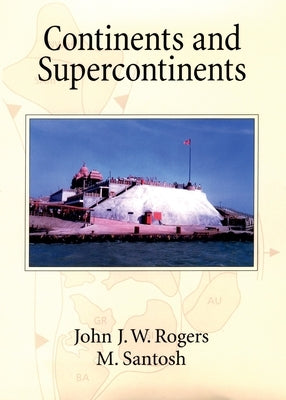
To this day, there is a great amount of controversy about where, when and how the so-called supercontinents--Pangea, Godwana, Rodinia, and Columbia--were made and broken. Continents and Supercontinents frames that controversy by giving all the necessary background on how continental crust is formed, modified, and destroyed, and what forces move plates. It also discusses how these processes affect the composition of seawater, climate, and the evolution of life.
Rogers and Santosh begin with a survey of plate tectonics, and go on to describe the composition, production, and destruction of continental and oceanic crust, and show that cratons or assemblies of cratons became the first true continents, approximately one billion years after the earliest continental crust evolved. The middle part of the book concentrates on supercontinents, beginning with a discussion of types of orogenic belts, distinguishing those that formed by closure of an ocean basin within the belt and those that formed by intracontinental deformation caused by stresses generated elsewhere. This information permits discrimination between models of supercontinent formation by accretion of numerous small terranes and by reorganization of large old continental blocks.
This background leads to a description of the assembly and fragmentation of supercontinents throughout earth history. The record is most difficult to interpret for the oldest supercontinent, Columbia, and also controversial for Rodinia, the next youngest supercontinent. The configurations and pattern of breakup of Gondwana and Pangea are well known, but some aspects of their assembly are unclear. The book also briefly describes the histories of continents after the breakup of Pangea, and discusses how changes in the composition of seawater, climate, and life may have been affected by the sizes and locations of continents and supercontinents.
Author: John J. W. Rogers, M. Santosh
Publisher: Oxford University Press, USA
Published: 09/16/2004
Pages: 304
Binding Type: Hardcover
Weight: 1.63lbs
Size: 10.22h x 7.28w x 0.77d
ISBN: 9780195165890
Review Citation(s):
Scitech Book News 12/01/2004 pg. 57
Choice 03/01/2005 pg. 1257
Rogers and Santosh begin with a survey of plate tectonics, and go on to describe the composition, production, and destruction of continental and oceanic crust, and show that cratons or assemblies of cratons became the first true continents, approximately one billion years after the earliest continental crust evolved. The middle part of the book concentrates on supercontinents, beginning with a discussion of types of orogenic belts, distinguishing those that formed by closure of an ocean basin within the belt and those that formed by intracontinental deformation caused by stresses generated elsewhere. This information permits discrimination between models of supercontinent formation by accretion of numerous small terranes and by reorganization of large old continental blocks.
This background leads to a description of the assembly and fragmentation of supercontinents throughout earth history. The record is most difficult to interpret for the oldest supercontinent, Columbia, and also controversial for Rodinia, the next youngest supercontinent. The configurations and pattern of breakup of Gondwana and Pangea are well known, but some aspects of their assembly are unclear. The book also briefly describes the histories of continents after the breakup of Pangea, and discusses how changes in the composition of seawater, climate, and life may have been affected by the sizes and locations of continents and supercontinents.
Author: John J. W. Rogers, M. Santosh
Publisher: Oxford University Press, USA
Published: 09/16/2004
Pages: 304
Binding Type: Hardcover
Weight: 1.63lbs
Size: 10.22h x 7.28w x 0.77d
ISBN: 9780195165890
Review Citation(s):
Scitech Book News 12/01/2004 pg. 57
Choice 03/01/2005 pg. 1257
This title is not returnable
Share