University of Pennsylvania Press
Dark Age Bodies: Gender and Monastic Practice in the Early Medieval West
Dark Age Bodies: Gender and Monastic Practice in the Early Medieval West
Couldn't load pickup availability
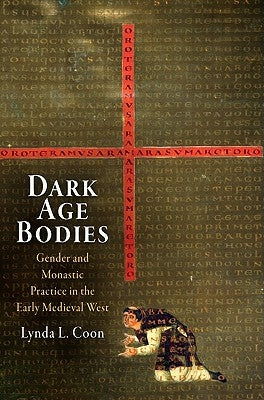
In Dark Age Bodies Lynda L. Coon reconstructs the gender ideology of monastic masculinity through an investigation of early medieval readings of the body. Focusing on the Carolingian era, Coon evaluates the ritual and liturgical performances of monastic bodies within the imaginative landscapes of same-sex ascetic communities in northern Europe. She demonstrates how the priestly body plays a significant role in shaping major aspects of Carolingian history, such as the revival of classicism, movements for clerical reform, and church-state relations. In the political realm, Carolingian churchmen consistently exploited monastic constructions of gender to assert the power of the monastery. Stressing the superior qualities of priestly virility, clerical elites forged a model of gender that sought to feminize lay male bodies through a variety of textual, ritual, and spatial means.
Focusing on three central themes--the body, architecture, and ritual practice--the book draws from a variety of visual and textual materials, including poetry, grammar manuals, rhetorical treatises, biblical exegesis, monastic regulations, hagiographies, illuminated manuscripts, building plans, and cloister design. Interdisciplinary in scope, Dark Age Bodies brings together scholarship in architectural history and cultural anthropology with recent works in religion, classics, and gender to present a significant reconsideration of Carolingian culture.Author: Lynda L. Coon
Publisher: University of Pennsylvania Press
Published: 12/07/2010
Pages: 416
Binding Type: Hardcover
Weight: 1.80lbs
Size: 9.10h x 6.20w x 1.50d
ISBN: 9780812242690
Review Citation(s):
Choice 08/01/2011
About the Author
Lynda L. Coon is Associate Professor of History at the University of Arkansas. She is the author of Sacred Fictions: Holy Women and Hagiography in Late Antiquity, also available from the University of Pennsylvania Press.
Share