1
/
of
1
Boydell Press
Daughters, Wives and Widows After the Black Death: Women in Sussex, 1350-1535
Daughters, Wives and Widows After the Black Death: Women in Sussex, 1350-1535
Regular price
$215.09 USD
Regular price
Sale price
$215.09 USD
Shipping calculated at checkout.
Quantity
Couldn't load pickup availability
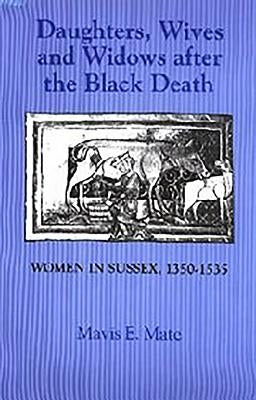
A leading issue among medieval historians of the 14th-15th centuries is the extent to which women benefited from the shortage of labour and increased availability of land in the years following the Black Death. Mavis Mate believes that it was not the golden age for women so frequently assumed, and draws on material from Sussex archives and on current research to support her argument. A late age at marriage, in the mid twenties, common in urban areas, does not seem to have occurred in rural Sussex. Both the practice of ultimogeniture on much of Sussex customary land, and the ability to subdivide property, facilitated early marriage. Furthermore, although married women could supplement their income with brewing and intermittent paid labour (especially at harvest time), the increased size of holdings meant that most married women spent more time on unpaid work on their own land than had been the case before the plague. Legal changes brought mixed fortunes. While some widows succeeded to larger portions and a more secure title to land, others were deprived of any land at all. It is hard, in the author's view, to accept from the evidence available that in general a widow enjoyed more power and independence than at any other point in her life. Likewise, women's lives continued to be constrained by social factors, and matters of class remained by and large inflexible: the age at which women married, their social horizons, their power within the household, their vulnerability to rape, and sundry other matters, were all affected by social class. Professor Mate's study compels a rethink on women's lives in the late middle ages. Her alertness to economic fluctuations within the period gives particularweight to her arguments about the relationship between economic change and women's welfare, while her observations on aspects of social change have a value that extends beyond the confines of women's history. Professor MAVIS E. MATE teaches in the Department of History at the University of Oregon.
Author: Mavis E. Mate
Publisher: Boydell Press
Published: 04/02/1998
Pages: 235
Binding Type: Hardcover
Weight: 1.15lbs
Size: 9.53h x 6.35w x 0.92d
ISBN: 9780851155340
Author: Mavis E. Mate
Publisher: Boydell Press
Published: 04/02/1998
Pages: 235
Binding Type: Hardcover
Weight: 1.15lbs
Size: 9.53h x 6.35w x 0.92d
ISBN: 9780851155340
Share