1
/
of
1
Oxford University Press, USA
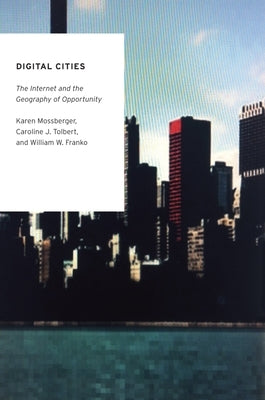
Digital Cities: The Internet and the Geography of Opportunity
Digital Cities: The Internet and the Geography of Opportunity
Regular price
$44.95 USD
Regular price
Sale price
$44.95 USD
Shipping calculated at checkout.
Quantity
Couldn't load pickup availability
In an age when the United Nations has declared access to the Internet a human right, and universal access to high-speed broadband is a national goal, urban areas have been largely ignored by federal policy. The cost of that neglect may well be the failure to realize the social benefits of
broadband and a broadly-connected digital society. Technology offers unparalleled advantages for innovation in urban areas - in the economy, health care, education, energy, transportation, government services, civic engagement, and more. With their density and networks of activity, cities hold the most potential for reaping the benefits of
technology. But there are surprisingly substantial disparities in broadband adoption across cities. More puzzlingly, rather than promoting innovation or addressing the high cost of broadband access, the US has mostly funded expensive rural infrastructure in sparsely-populated areas. Digital Cities tells the story of information technology use and inequality in American metropolitan areas and discusses directions for change. The authors argue that mobile-only Internet, the form used by many minorities and urban poor, is a second-class form of access, as they offer evidence that
users with such limited access have dramatically lower levels of online activity and skill. Digital citizenship and full participation in economic, social and political life requires home access. Using multilevel statistical models, the authors present new data ranking broadband access and use in
the nation's 50 largest cities and metropolitan areas, showing considerable variation across places. Unique, neighborhood data from Chicago examines the impact of poverty and segregation on access in a large and diverse city, and it parallels analysis of national patterns in urban, suburban and
rural areas. Digital Cities demonstrate the significance of place for shaping our digital future and the need for policies that recognize the critical role of cities in addressing both social inequality and opportunity.
Author: Karen Mossberger, Caroline J. Tolbert, William W. Franko
Publisher: Oxford University Press, USA
Published: 12/10/2012
Pages: 368
Binding Type: Paperback
Weight: 1.30lbs
Size: 9.20h x 6.20w x 1.00d
ISBN: 9780199812950
broadband and a broadly-connected digital society. Technology offers unparalleled advantages for innovation in urban areas - in the economy, health care, education, energy, transportation, government services, civic engagement, and more. With their density and networks of activity, cities hold the most potential for reaping the benefits of
technology. But there are surprisingly substantial disparities in broadband adoption across cities. More puzzlingly, rather than promoting innovation or addressing the high cost of broadband access, the US has mostly funded expensive rural infrastructure in sparsely-populated areas. Digital Cities tells the story of information technology use and inequality in American metropolitan areas and discusses directions for change. The authors argue that mobile-only Internet, the form used by many minorities and urban poor, is a second-class form of access, as they offer evidence that
users with such limited access have dramatically lower levels of online activity and skill. Digital citizenship and full participation in economic, social and political life requires home access. Using multilevel statistical models, the authors present new data ranking broadband access and use in
the nation's 50 largest cities and metropolitan areas, showing considerable variation across places. Unique, neighborhood data from Chicago examines the impact of poverty and segregation on access in a large and diverse city, and it parallels analysis of national patterns in urban, suburban and
rural areas. Digital Cities demonstrate the significance of place for shaping our digital future and the need for policies that recognize the critical role of cities in addressing both social inequality and opportunity.
Author: Karen Mossberger, Caroline J. Tolbert, William W. Franko
Publisher: Oxford University Press, USA
Published: 12/10/2012
Pages: 368
Binding Type: Paperback
Weight: 1.30lbs
Size: 9.20h x 6.20w x 1.00d
ISBN: 9780199812950
About the Author
Karen Mossberger is Professor of Public Administration at the University of Illinois-Chicago.
This title is not returnable
Share