1
/
of
1
Oxford University Press, USA
Emotions in a Crusading Context, 1095-1291
Emotions in a Crusading Context, 1095-1291
Regular price
$98.00 USD
Regular price
Sale price
$98.00 USD
Shipping calculated at checkout.
Quantity
Couldn't load pickup availability
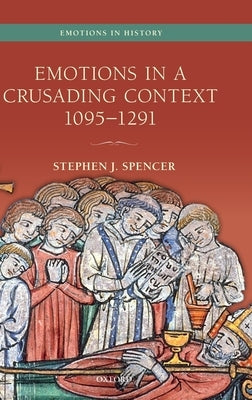
Emotions in a Crusading Context is the first book-length study of the emotional rhetoric of crusading. It investigates the ways in which a number of emotions and affective displays-primarily fear, anger, and weeping-were understood, represented, and utilised in twelfth- and thirteenth-century
western narratives of the crusades, making use of a broad range of comparative material to gauge the distinctiveness of those texts: crusader letters, papal encyclicals, model sermons, chansons de geste, lyrics, and an array of theological and philosophical treatises. In addition to charting
continuities and changes over time in the emotional landscape of crusading, this study identifies the underlying influences which shaped how medieval authors represented and used emotions; analyzes the passions crusade participants were expected to embrace and reject; and assesses whether the idea
of crusading created a profoundly new set of attitudes towards emotions. Emotions in a Crusading Context calls on scholars of the crusades to reject the traditional methodological approach of taking the emotional descriptions embedded within historical narratives as straightforward reflections of protagonists' lived feelings, and in so doing challenges the long
historiographical tradition of reconstructing participants' beliefs and experiences from these texts. Within the history of emotions, Stephen J. Spencer demonstrates that, despite the ongoing drive to develop new methodologies for studying the emotional standards of the past, typified by experiments
in 'neurohistory', the social constructionist (or cultural-historical) approach still has much to offer the historian of medieval emotions.
Author: Stephen J. Spencer
Publisher: Oxford University Press, USA
Published: 01/28/2020
Pages: 320
Binding Type: Hardcover
Weight: 1.35lbs
Size: 9.20h x 6.20w x 1.00d
ISBN: 9780198833369
University of London, conducting research on the memorisation of the Third Crusade in western Europe and the Latin East before 1300.
western narratives of the crusades, making use of a broad range of comparative material to gauge the distinctiveness of those texts: crusader letters, papal encyclicals, model sermons, chansons de geste, lyrics, and an array of theological and philosophical treatises. In addition to charting
continuities and changes over time in the emotional landscape of crusading, this study identifies the underlying influences which shaped how medieval authors represented and used emotions; analyzes the passions crusade participants were expected to embrace and reject; and assesses whether the idea
of crusading created a profoundly new set of attitudes towards emotions. Emotions in a Crusading Context calls on scholars of the crusades to reject the traditional methodological approach of taking the emotional descriptions embedded within historical narratives as straightforward reflections of protagonists' lived feelings, and in so doing challenges the long
historiographical tradition of reconstructing participants' beliefs and experiences from these texts. Within the history of emotions, Stephen J. Spencer demonstrates that, despite the ongoing drive to develop new methodologies for studying the emotional standards of the past, typified by experiments
in 'neurohistory', the social constructionist (or cultural-historical) approach still has much to offer the historian of medieval emotions.
Author: Stephen J. Spencer
Publisher: Oxford University Press, USA
Published: 01/28/2020
Pages: 320
Binding Type: Hardcover
Weight: 1.35lbs
Size: 9.20h x 6.20w x 1.00d
ISBN: 9780198833369
About the Author
Stephen J. Spencer, Past and Present Fellow, Institute of Historical Research, School of Advanced Study, University of London
University of London, conducting research on the memorisation of the Third Crusade in western Europe and the Latin East before 1300.
Share