1
/
of
1
Cambridge University Press
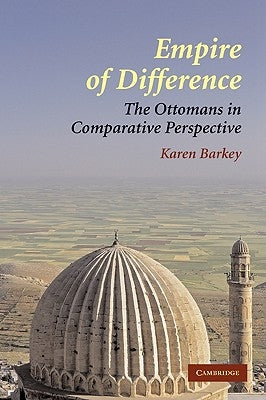
Empire of Difference: The Ottomans in Comparative Perspective
Empire of Difference: The Ottomans in Comparative Perspective
Regular price
$41.89 USD
Regular price
Sale price
$41.89 USD
Shipping calculated at checkout.
Quantity
Couldn't load pickup availability
This book is a comparative study of imperial organization and longevity that assesses Ottoman successes as well as failures against those of other empires with similar characteristics. Barkey examines the Ottoman Empire's social organization and mechanisms of rule at key moments of its history, emergence, imperial institutionalization, remodeling, and transition to nation-state, revealing how the empire managed these moments, adapted, and averted crises and what changes made it transform dramatically. The flexible techniques by which the Ottomans maintained their legitimacy, the cooperation of their diverse elites both at the center and in the provinces, as well as their control over economic and human resources were responsible for the longevity of this particular "negotiated empire." Her analysis illuminates topics that include imperial governance, imperial institutions, imperial diversity and multiculturalism, the manner in which dissent is handled and/or internalized, and the nature of state society negotiations.
Author: Karen Barkey
Publisher: Cambridge University Press
Published: 06/23/2008
Pages: 360
Binding Type: Paperback
Weight: 1.15lbs
Size: 9.20h x 6.10w x 0.90d
ISBN: 9780521715331
Review Citation(s):
Chronicle of Higher Education 10/10/2008 pg. 20
Author: Karen Barkey
Publisher: Cambridge University Press
Published: 06/23/2008
Pages: 360
Binding Type: Paperback
Weight: 1.15lbs
Size: 9.20h x 6.10w x 0.90d
ISBN: 9780521715331
Review Citation(s):
Chronicle of Higher Education 10/10/2008 pg. 20
About the Author
Barkey, Karen: - "Karen Barkey is currently a Professor of Sociology and History at Columbia University. She is the author of Bandits and Bureaucrats: The Ottoman Route to State Centralization, winner of the Social Science History Award in 1995 and co-editor of After Empire: Multiethnic Societies and Nation-Building: The Soviet Union, and the Russian, Habsburg and Ottoman Empires with Mark von Hagen. She has been awarded fellowships from the United States Institute of Peace, Social Science Research Council - MacArthur and National Humanities Center."
Share