1
/
of
1
Palgrave MacMillan
Fierce Feminine Divinities of Eurasia and Latin America: Baba Yaga, Kālī, Pombagira, and Santa Muerte
Fierce Feminine Divinities of Eurasia and Latin America: Baba Yaga, Kālī, Pombagira, and Santa Muerte
Regular price
$152.81 USD
Regular price
Sale price
$152.81 USD
Shipping calculated at checkout.
Quantity
Couldn't load pickup availability
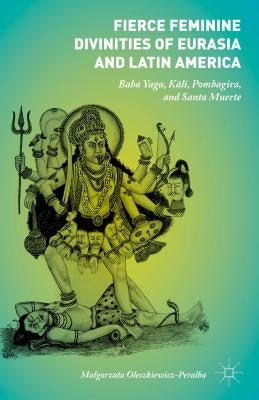
In this provocative book, Malgorzata Oleszkiewicz-Peralba examines untamed feminine divinities from around the world. Although distant geographically, these divine figures are surprisingly similar-representing concepts of liminality, outsiderhood, and structural inferiority, embodied in the divine feminine. These strong, independent, unrestrained figures are connected to the periphery and to magical powers, including power over sexuality, transformation, and death. Oleszkiewicz-Peralba offers a study of the origin and worship of four feminine deities across cultures and continents: the Slavic Baba Yaga, the Hindu Kālī, the Brazilian Pombagira, and the Mexican Santa Muerte. Although these divinities have often been marginalized through dismissal, demonization, and dulcification, they continue to be extremely attractive, as they empower their devotees confronting them with the ultimate reality of transience and death. Oleszkiewicz-Peralba examines how these sacred icons have been adapted and transformed across time and place.
Author: Malgorzata Oleszkiewicz-Peralba
Publisher: Palgrave MacMillan
Published: 09/10/2015
Pages: 188
Binding Type: Hardcover
Weight: 0.80lbs
Size: 8.60h x 5.50w x 0.70d
ISBN: 9781137543547
Author: Malgorzata Oleszkiewicz-Peralba
Publisher: Palgrave MacMillan
Published: 09/10/2015
Pages: 188
Binding Type: Hardcover
Weight: 0.80lbs
Size: 8.60h x 5.50w x 0.70d
ISBN: 9781137543547
About the Author
Malgorzata Oleszkiewicz-Peralba is Professor of Latin American Literary and Cultural Studies at the University of Texas at San Antonio, USA. Her publications include The Black Madonna in Latin America and Europe: Tradition and Transformation (2007), and Teatro popular peruano: del precolombino al siglo XX (1995), as well as numerous scholarly book chapters and articles.
Share