1
/
of
1
Cambridge University Press
Gender Hierarchy in the Qur'an: Medieval Interpretations, Modern Responses
Gender Hierarchy in the Qur'an: Medieval Interpretations, Modern Responses
Regular price
$60.92 USD
Regular price
Sale price
$60.92 USD
Shipping calculated at checkout.
Quantity
Couldn't load pickup availability
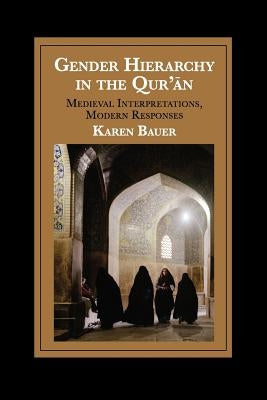
This book explores how medieval and modern Muslim religious scholars ('ulamā') interpret gender roles in Qur'ānic verses on legal testimony, marriage, and human creation. Citing these verses, medieval scholars developed increasingly complex laws and interpretations upholding a male-dominated gender hierarchy; aspects of their interpretations influence religious norms and state laws in Muslim-majority countries today, yet other aspects have been discarded entirely. Karen Bauer traces the evolution of their interpretations, showing how they have been adopted, adapted, rejected, or replaced over time, by comparing the Qur'ān with a wide range of Qur'ānic commentaries and interviews with prominent religious scholars from Iran and Syria. At times, tradition is modified in unexpected ways: learned women argue against gender equality, or Grand Ayatollahs reject sayings of the Prophet, citing science instead. This innovative and engaging study highlights the effects of social and intellectual contexts on the formation of tradition, and on modern responses to it.
Author: Karen Bauer
Publisher: Cambridge University Press
Published: 06/01/2017
Pages: 322
Binding Type: Paperback
Weight: 1.05lbs
Size: 9.00h x 6.00w x 0.73d
ISBN: 9781107613935
Author: Karen Bauer
Publisher: Cambridge University Press
Published: 06/01/2017
Pages: 322
Binding Type: Paperback
Weight: 1.05lbs
Size: 9.00h x 6.00w x 0.73d
ISBN: 9781107613935
About the Author
Bauer, Karen: - Karen Bauer is a Research Associate in Qur'ānic Studies at the Institute of Ismaili Studies in London. Her publications include articles on the Qur'ān, the genre of tafsīr and gender, as well as an edited volume entitled Aims, Methods and Contexts of Qur'anic Exegesis (2nd/8th-9th/15th Centuries) (2014).
Share