1
/
of
1
Princeton University Press
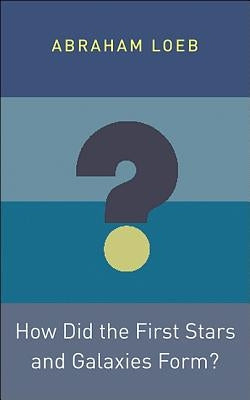
How Did the First Stars and Galaxies Form?
How Did the First Stars and Galaxies Form?
Regular price
$43.00 USD
Regular price
Sale price
$43.00 USD
Shipping calculated at checkout.
Quantity
Couldn't load pickup availability
Though astrophysicists have developed a theoretical framework for understanding how the first stars and galaxies formed, only now are we able to begin testing those theories with actual observations of the very distant, early universe. We are entering a new and exciting era of discovery that will advance the frontiers of knowledge, and this book couldn't be more timely. It covers all the basic concepts in cosmology, drawing on insights from an astronomer who has pioneered much of this research over the past two decades.
Abraham Loeb starts from first principles, tracing the theoretical foundations of cosmology and carefully explaining the physics behind them. Topics include the gravitational growth of perturbations in an expanding universe, the abundance and properties of dark matter halos and galaxies, reionization, the observational methods used to detect the earliest galaxies and probe the diffuse gas between them--and much more. Cosmology seeks to solve the fundamental mystery of our cosmic origins. This book offers a succinct and accessible primer at a time when breathtaking technological advances promise a wealth of new observational data on the first stars and galaxies.- Provides a concise introduction to cosmology
- Covers all the basic concepts
- Gives an overview of the gravitational growth of perturbations in an expanding universe
- Explains the process of reionization
- Describes the observational methods used to detect the earliest galaxies
Author: Abraham Loeb
Publisher: Princeton University Press
Published: 08/08/2010
Pages: 216
Binding Type: Paperback
Weight: 0.55lbs
Size: 7.90h x 5.00w x 0.60d
ISBN: 9780691145167
Review Citation(s):
Choice 04/01/2011
About the Author
Abraham Loeb is professor of astronomy and director of the Institute for Theory and Computation at Harvard University.
Share