1
/
of
1
Oxford University Press, USA
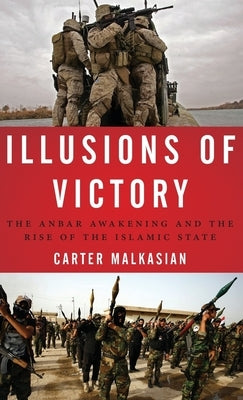
Illusions of Victory: The Anbar Awakening and the Rise of the Islamic State
Illusions of Victory: The Anbar Awakening and the Rise of the Islamic State
Regular price
$33.95 USD
Regular price
Sale price
$33.95 USD
Shipping calculated at checkout.
Quantity
Couldn't load pickup availability
In the immediate aftermath of the 2007 Surge of American troops in Iraq, the defeat of al-Qaeda in Iraq (AQI) in Anbar Province was widely hailed as one of America's signature victories. US Marines and soldiers fought for years there, in grinding battles such as Fallujah and Ramadi that
define the experience of Iraq. Eventually, the fractious tribal sheiks in that province, with the help of American troops, united in an Awakening that dealt AQI a stunning defeat. The Awakening's success argued that the United States could intervene in a war-torn country and, with the right
strategy, bring stability and peace. It seemed to exemplify snatching victory from the jaws of defeat. A decade later, the situation in Anbar Province is dramatically different. In 2014, much of Anbar fell to the AQI's successor organization, the Islamic State, which swept through the region with shocking ease. In Illusions of Victory, Carter Malkasian looks at the wreckage to explain why the
Awakening's initial promise proved misleading and why victory was unsustainable. Malkasian begins by tracing the origins of the Awakening, then turns his attention to what happened in its wake. After the United States left, Iraq's Shi'a government sidelined Sunni leaders throughout the country. AQI,
brought back to life as the Islamic State, expanded in northern and western Iraq and quickly found a receptive audience among marginalized Sunnis. In short order, the progress that had resulted from the Awakening fell apart. Malkasian draws many lessons from Anbar. Chief among them, the most stunning of victories may not last. The fact that the leading model of success fell apart severely damages the idea that the United States can send the military to a country for a few years and create lasting peace. Even the most
successful example was bound to deeper social, sectarian, and religious forces insensitive to temporary boots on the ground. From today's perspective, rather than decisive success, Anbar exemplifies how intervention itself is a costly, long-term project. The most brilliant victory could not escape
this wisdom.
Author: Carter Malkasian
Publisher: Oxford University Press, USA
Published: 08/16/2017
Pages: 280
Binding Type: Hardcover
Weight: 0.90lbs
Size: 8.40h x 5.80w x 0.90d
ISBN: 9780190659424
define the experience of Iraq. Eventually, the fractious tribal sheiks in that province, with the help of American troops, united in an Awakening that dealt AQI a stunning defeat. The Awakening's success argued that the United States could intervene in a war-torn country and, with the right
strategy, bring stability and peace. It seemed to exemplify snatching victory from the jaws of defeat. A decade later, the situation in Anbar Province is dramatically different. In 2014, much of Anbar fell to the AQI's successor organization, the Islamic State, which swept through the region with shocking ease. In Illusions of Victory, Carter Malkasian looks at the wreckage to explain why the
Awakening's initial promise proved misleading and why victory was unsustainable. Malkasian begins by tracing the origins of the Awakening, then turns his attention to what happened in its wake. After the United States left, Iraq's Shi'a government sidelined Sunni leaders throughout the country. AQI,
brought back to life as the Islamic State, expanded in northern and western Iraq and quickly found a receptive audience among marginalized Sunnis. In short order, the progress that had resulted from the Awakening fell apart. Malkasian draws many lessons from Anbar. Chief among them, the most stunning of victories may not last. The fact that the leading model of success fell apart severely damages the idea that the United States can send the military to a country for a few years and create lasting peace. Even the most
successful example was bound to deeper social, sectarian, and religious forces insensitive to temporary boots on the ground. From today's perspective, rather than decisive success, Anbar exemplifies how intervention itself is a costly, long-term project. The most brilliant victory could not escape
this wisdom.
Author: Carter Malkasian
Publisher: Oxford University Press, USA
Published: 08/16/2017
Pages: 280
Binding Type: Hardcover
Weight: 0.90lbs
Size: 8.40h x 5.80w x 0.90d
ISBN: 9780190659424
About the Author
Carter Malkasian is the author of War Comes to Garmser, an award-winning history of one district in Afghanistan. He spent over five years working as a civilian with the State Department and US military in Iraq and Afghanistan.
Share