1
/
of
1
Duke University Press
Indian Migration and Empire: A Colonial Genealogy of the Modern State
Indian Migration and Empire: A Colonial Genealogy of the Modern State
Regular price
$46.51 USD
Regular price
Sale price
$46.51 USD
Shipping calculated at checkout.
Quantity
Couldn't load pickup availability
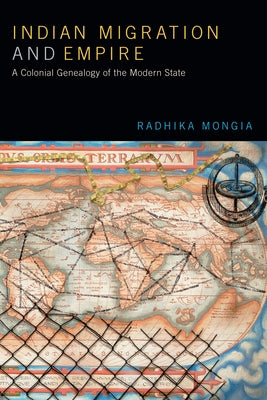
How did states come to monopolize control over migration? What do the processes that produced this monopoly tell us about the modern state? In Indian Migration and Empire Radhika Mongia provocatively argues that the formation of colonial migration regulations was dependent upon, accompanied by, and generative of profound changes in normative conceptions of the modern state. Focused on state regulation of colonial Indian migration between 1834 and 1917, Mongia illuminates the genesis of central techniques of migration control. She shows how important elements of current migration regimes, including the notion of state sovereignty as embodying the authority to control migration, the distinction between free and forced migration, the emergence of passports, the formation of migration bureaucracies, and the incorporation of kinship relations into migration logics, are the product of complex debates that attended colonial migrations. By charting how state control of migration was critical to the transformation of a world dominated by empire-states into a world dominated by nation-states, Mongia challenges positions that posit a stark distinction between the colonial state and the modern state to trace aspects of their entanglements.
Author: Radhika Mongia
Publisher: Duke University Press
Published: 08/16/2018
Pages: 248
Binding Type: Paperback
Weight: 0.90lbs
Size: 9.10h x 6.10w x 0.80d
ISBN: 9780822371021
Review Citation(s):
Choice 02/01/2019
Author: Radhika Mongia
Publisher: Duke University Press
Published: 08/16/2018
Pages: 248
Binding Type: Paperback
Weight: 0.90lbs
Size: 9.10h x 6.10w x 0.80d
ISBN: 9780822371021
Review Citation(s):
Choice 02/01/2019
About the Author
Radhika Mongia is Associate Professor of Sociology at York University.
Share