1
/
of
1
Cambridge University Press
International Relations Theory and the Consequences of Unipolarity
International Relations Theory and the Consequences of Unipolarity
Regular price
$59.32 USD
Regular price
Sale price
$59.32 USD
Shipping calculated at checkout.
Quantity
Couldn't load pickup availability
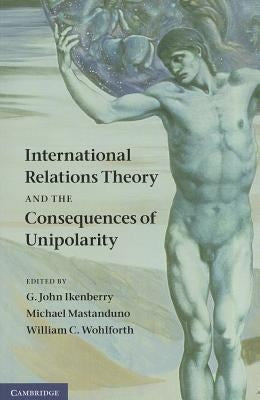
The end of the Cold War and subsequent dissolution of the Soviet Union resulted in a new unipolar international system that presented fresh challenges to international relations theory. Since the Enlightenment, scholars have speculated that patterns of cooperation and conflict might be systematically related to the manner in which power is distributed among states. Most of what we know about this relationship, however, is based on European experiences between the seventeenth and twentieth centuries, when five or more powerful states dominated international relations, and the latter twentieth century, when two superpowers did so. Building on a highly successful special issue of the leading journal World Politics, this book seeks to determine whether what we think we know about power and patterns of state behavior applies to the current 'unipolar' setting and, if not, how core theoretical propositions about interstate interactions need to be revised.
Author: G. John Ikenberry
Publisher: Cambridge University Press
Published: 09/01/2011
Pages: 392
Binding Type: Paperback
Weight: 1.25lbs
Size: 8.80h x 6.00w x 0.80d
ISBN: 9781107634596
Author: G. John Ikenberry
Publisher: Cambridge University Press
Published: 09/01/2011
Pages: 392
Binding Type: Paperback
Weight: 1.25lbs
Size: 8.80h x 6.00w x 0.80d
ISBN: 9781107634596
About the Author
Ikenberry, G. John: - G. John Ikenberry is the Albert G. Milbank Professor of Politics and International Affairs at Princeton University in the Department of Politics and the Woodrow Wilson School of Public and International Affairs. He is also a Global Eminence Scholar at Kyung Hee University.Mastanduno, Michael: - Michael Mastanduno is Nelson A. Rockefeller Professor of Government and Associate Dean for the Social Sciences at Dartmouth College.Wohlforth, William C.: - William C. Wohlforth is the Daniel Webster Professor at Dartmouth College, where he teaches in the Department of Government. He is the editor-in-chief of Security Studies.
Share