Self Publish
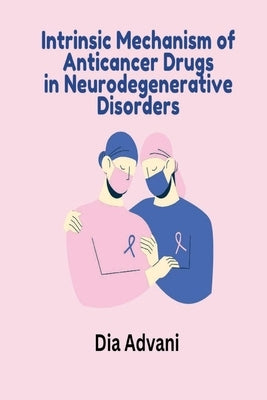
Intrinsic Mechanism of Anticancer Drugs in Neurodegenerative Disorders
Intrinsic Mechanism of Anticancer Drugs in Neurodegenerative Disorders
Couldn't load pickup availability
Neurodegenerative (NDDs) disorders are one of the most alarming medical illnesses
affecting the brain and nervous system. The Lack of understanding of the disease-leading
mechanisms makes the treatment options unavailable. Currently, an estimated 35.6 million
people are surviving with Dementia, and the number is presumed to triple by the next 30
years [1]. According to the report of the World Health Organization (WHO), in the next 20
years, NDDs affecting motor functions will be the second most widespread reason for
human death [2]. NDDs are categorized based on clinical features- dementia, parkinsonism,
or motor neuron disease, or based on the anatomic areas covered- spinocerebellar
degeneration, frontotemporal degeneration and extrapyramidal disorders. In general,
synucleinopathies, and TDP-43 proteinopathies are the most
widespread NDDs. Abnormal protein aggregation is the major hallmark feature of all
NDDs associated with some fundamental processes such as progressive neuronal loss,
neuroinflammation, dysfunction of the Ubiquitin proteasome system (UPS), abnormal
autophagic processes, oxidative insult, and neuronal apoptosis
(HD), and Multiple sclerosis (MS) are the major NDDs affecting the global health.
Aging is the biggest risk factor for various diseases, from cancer to NDDs. These agerelated
diseases can be categorized into two groups. Loss-of-function diseases like NDDs
are represented by the loss of cells, tissues, or optimal physiological functions. While gainof-
function diseases like cancer exhibit gain of cells and, sometimes, new cellular functions
Author: Dia Advani
Publisher: Self Publish
Published: 06/25/2023
Pages: 232
Binding Type: Paperback
Weight: 0.70lbs
Size: 9.00h x 6.00w x 0.49d
ISBN: 9781916706217
Share