1
/
of
1
Tin House Books
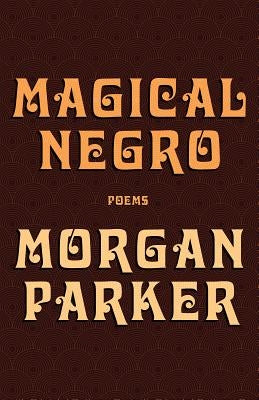
Magical Negro
Magical Negro
Regular price
$17.95 USD
Regular price
Sale price
$17.95 USD
Shipping calculated at checkout.
Quantity
Couldn't load pickup availability
Magical Negro is an archive of black everydayness, a catalog of contemporary folk heroes, an ethnography of ancestral grief, and an inventory of figureheads, idioms, and customs. These American poems are both elegy and jive, joke and declaration, songs of congregation and self-conception. They connect themes of loneliness, displacement, grief, ancestral trauma, and objectification, while exploring and troubling tropes and stereotypes of Black Americans. Focused primarily on depictions of black womanhood alongside personal narratives, the collection tackles interior and exterior politics--of both the body and society, of both the individual and the collective experience. In Magical Negro, Parker creates a space of witness, of airing grievances, of pointing out patterns. In these poems are living documents, pleas, latent traumas, inside jokes, and unspoken anxieties situated as firmly in the past as in the present--timeless black melancholies and triumphs.
Author: Morgan Parker
Publisher: Tin House Books
Published: 02/05/2019
Pages: 112
Binding Type: Paperback
Weight: 0.36lbs
Size: 8.40h x 5.60w x 0.30d
ISBN: 9781947793187
Author: Morgan Parker
Publisher: Tin House Books
Published: 02/05/2019
Pages: 112
Binding Type: Paperback
Weight: 0.36lbs
Size: 8.40h x 5.60w x 0.30d
ISBN: 9781947793187
About the Author
Parker, Morgan: - Morgan Parker is a poet, essayist, and novelist. She is the author of the young adult novel Who Put This Song On? and the poetry collections There Are More Beautiful Things Than Beyoncé and Magical Negro, which won the 2019 National Book Critics Circle Award. Parker's debut book of nonfiction is forthcoming from One World. She is the recipient of a National Endowment for the Arts Literature Fellowship, winner of a Pushcart Prize, and has been hailed by The New York Times as "a dynamic craftsperson" of "considerable consequence to American poetry."
Share