1
/
of
1
Oxford University Press, USA
Mark of Cain: Guilt and Denial in the Post-War Lives of Nazi Perpetrators
Mark of Cain: Guilt and Denial in the Post-War Lives of Nazi Perpetrators
Regular price
$138.02 USD
Regular price
Sale price
$138.02 USD
Shipping calculated at checkout.
Quantity
Couldn't load pickup availability
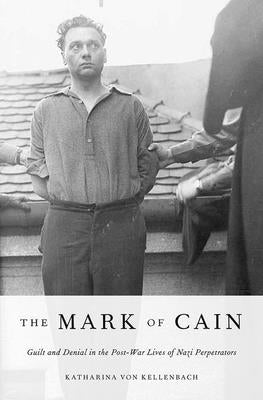
The Mark of Cain fleshes out a history of conversations that contributed to Germany's coming to terms with a guilty past. Katharina von Kellenbach draws on letters exchanged between clergy and Nazi perpetrators, written notes of prison chaplains, memoirs, sermons, and prison publications to
illuminate the moral and spiritual struggles of perpetrators after World War II. These documents provide intimate insights into the self-reflection and self-perception of perpetrators. As Germany looks back on more than sixty years of passionate debate about political, personal and legal guilt, its
ongoing engagement with the legacy of perpetration has transformed German culture and politics. The willingness to forgive and forget displayed by the father in the parable of the Prodigal Son became the paradigm central to Germany's rehabilitation and reintegration of Nazi perpetrators. The problem with Luke's parable in this context is that, unlike the son in the parable, perpetrators did
not ask for forgiveness. Most agents of state crimes felt innocent. Von Kellenbach proposes the story of the mark of Cain as a counter narrative. In contrast to the Prodigal Son, who is quickly forgiven and welcomed back into the house of the father, the fratricidal Cain is charged to rebuild his
life on the basis of open communication about the past. The story of the Prodigal Son equates forgiveness with forgetting; Cain's story links redemption with remembrance and suggests a strategy of critical engagement with perpetrators.
Author: Katharina Von Kellenbach
Publisher: Oxford University Press, USA
Published: 06/25/2013
Pages: 304
Binding Type: Hardcover
Weight: 1.14lbs
Size: 9.30h x 6.50w x 1.20d
ISBN: 9780199937455
Review Citation(s):
Christian Century 04/30/2014 pg. 27
illuminate the moral and spiritual struggles of perpetrators after World War II. These documents provide intimate insights into the self-reflection and self-perception of perpetrators. As Germany looks back on more than sixty years of passionate debate about political, personal and legal guilt, its
ongoing engagement with the legacy of perpetration has transformed German culture and politics. The willingness to forgive and forget displayed by the father in the parable of the Prodigal Son became the paradigm central to Germany's rehabilitation and reintegration of Nazi perpetrators. The problem with Luke's parable in this context is that, unlike the son in the parable, perpetrators did
not ask for forgiveness. Most agents of state crimes felt innocent. Von Kellenbach proposes the story of the mark of Cain as a counter narrative. In contrast to the Prodigal Son, who is quickly forgiven and welcomed back into the house of the father, the fratricidal Cain is charged to rebuild his
life on the basis of open communication about the past. The story of the Prodigal Son equates forgiveness with forgetting; Cain's story links redemption with remembrance and suggests a strategy of critical engagement with perpetrators.
Author: Katharina Von Kellenbach
Publisher: Oxford University Press, USA
Published: 06/25/2013
Pages: 304
Binding Type: Hardcover
Weight: 1.14lbs
Size: 9.30h x 6.50w x 1.20d
ISBN: 9780199937455
Review Citation(s):
Christian Century 04/30/2014 pg. 27
About the Author
Katharina von Kellenbach is Professor of Religious Studies at St. Mary's College of Maryland.
This title is not returnable
Share