1
/
of
1
University of North Carolina Press
Martha Brae's Two Histories: European Expansion and Caribbean Culture-Building in Jamaica
Martha Brae's Two Histories: European Expansion and Caribbean Culture-Building in Jamaica
Regular price
$93.40 USD
Regular price
Sale price
$93.40 USD
Shipping calculated at checkout.
Quantity
Couldn't load pickup availability
Based on historical research and more than thirty years of anthropological fieldwork, this wide-ranging study underlines the importance of Caribbean cultures for anthropology, which has generally marginalized Europe's oldest colonial sphere.
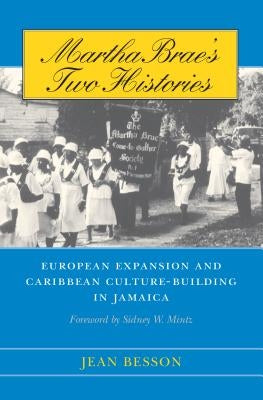
Located at the gateway to the New World in the plantation heartlands of the Americas, the settlement of Martha Brae, Jamaica, has witnessed the unfolding of two distinct yet interrelated histories. Exploring the significance of Martha Brae as a European Caribbean slaving port in the eighteenth century, Jean Besson simultaneously uncovers the neglected tale of Martha Brae's gradual appropriation by ex-slaves and its transformation into an African Caribbean free village, bringing the story right up to the present day.
Central to this transformation is the system of "family land," which interrelates with kinship, community, economy, cosmology, gender, oral tradition, state law, and migration. Besson shows that this customary land tenure is not a passive legacy from either Africa or Europe, as conventional theories contend, but a dynamic creole institution created by Caribbean people in response to European American land monopoly and cultural dominance. This perspective advances debates on African American cultural history and the anthropological study of culture.
Author: Jean Besson
Publisher: University of North Carolina Press
Published: 11/25/2002
Pages: 424
Binding Type: Paperback
Weight: 1.33lbs
Size: 9.38h x 6.18w x 1.00d
ISBN: 9780807854099
Located at the gateway to the New World in the plantation heartlands of the Americas, the settlement of Martha Brae, Jamaica, has witnessed the unfolding of two distinct yet interrelated histories. Exploring the significance of Martha Brae as a European Caribbean slaving port in the eighteenth century, Jean Besson simultaneously uncovers the neglected tale of Martha Brae's gradual appropriation by ex-slaves and its transformation into an African Caribbean free village, bringing the story right up to the present day.
Central to this transformation is the system of "family land," which interrelates with kinship, community, economy, cosmology, gender, oral tradition, state law, and migration. Besson shows that this customary land tenure is not a passive legacy from either Africa or Europe, as conventional theories contend, but a dynamic creole institution created by Caribbean people in response to European American land monopoly and cultural dominance. This perspective advances debates on African American cultural history and the anthropological study of culture.
Author: Jean Besson
Publisher: University of North Carolina Press
Published: 11/25/2002
Pages: 424
Binding Type: Paperback
Weight: 1.33lbs
Size: 9.38h x 6.18w x 1.00d
ISBN: 9780807854099
About the Author
Besson, Jean: - Jean Besson, a Jamaican, is a senior lecturer in anthropology at Goldsmiths College, University of London.
Share