1
/
of
1
Oxford University Press, USA
Martyrs' Mirror: Persecution and Holiness in Early New England
Martyrs' Mirror: Persecution and Holiness in Early New England
Regular price
$46.00 USD
Regular price
Sale price
$46.00 USD
Shipping calculated at checkout.
Quantity
Couldn't load pickup availability
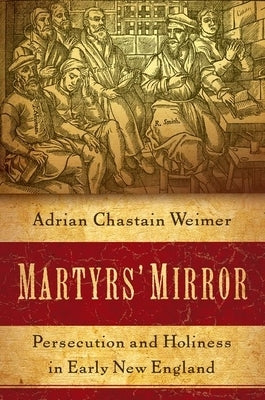
Martyrs' Mirror examines the folklore of martyrdom among seventeenth-century New England Protestants, exploring how they imagined themselves within biblical and historical narratives of persecution. Memories of martyrdom, especially stories of the Protestants killed during the reign of Queen
Mary in the mid-sixteenth century, were central to a model of holiness and political legitimacy. The colonists of early New England drew on this historical imagination in order to strengthen their authority in matters of religion during times of distress. By examining how the notions of persecution
and martyrdom move in and out of the writing of the period, Adrian Chastain Weimer finds that the idea of the true church as a persecuted church infused colonial identity. Though contested, the martyrs formed a shared heritage, and fear of being labeled a persecutor, or even admiration for a cheerful sufferer, could serve to inspire religious tolerance. The sense of being persecuted also allowed colonists to avoid responsibility for aggression against Algonquian
tribes. Surprisingly, those wishing to defend maltreated Christian Algonquians wrote their history as a continuation of the persecutions of the true church. This examination of the historical imagination of martyrdom contributes to our understanding of the meaning of suffering and holiness in
English Protestant culture, of the significance of religious models to debates over political legitimacy, and of the cultural history of persecution and tolerance.
Author: Adrian Chastain Weimer
Publisher: Oxford University Press, USA
Published: 07/01/2014
Pages: 240
Binding Type: Paperback
Weight: 0.80lbs
Size: 9.40h x 6.10w x 0.60d
ISBN: 9780199390953
Mary in the mid-sixteenth century, were central to a model of holiness and political legitimacy. The colonists of early New England drew on this historical imagination in order to strengthen their authority in matters of religion during times of distress. By examining how the notions of persecution
and martyrdom move in and out of the writing of the period, Adrian Chastain Weimer finds that the idea of the true church as a persecuted church infused colonial identity. Though contested, the martyrs formed a shared heritage, and fear of being labeled a persecutor, or even admiration for a cheerful sufferer, could serve to inspire religious tolerance. The sense of being persecuted also allowed colonists to avoid responsibility for aggression against Algonquian
tribes. Surprisingly, those wishing to defend maltreated Christian Algonquians wrote their history as a continuation of the persecutions of the true church. This examination of the historical imagination of martyrdom contributes to our understanding of the meaning of suffering and holiness in
English Protestant culture, of the significance of religious models to debates over political legitimacy, and of the cultural history of persecution and tolerance.
Author: Adrian Chastain Weimer
Publisher: Oxford University Press, USA
Published: 07/01/2014
Pages: 240
Binding Type: Paperback
Weight: 0.80lbs
Size: 9.40h x 6.10w x 0.60d
ISBN: 9780199390953
About the Author
Adrian Chastain Weimer is Assistant Professor of History at Providence College.
This title is not returnable
Share