1
/
of
1
University of North Carolina Press
Measures of Equality: Social Science, Citizenship, and Race in Cuba, 1902-1940
Measures of Equality: Social Science, Citizenship, and Race in Cuba, 1902-1940
Regular price
$72.17 USD
Regular price
Sale price
$72.17 USD
Shipping calculated at checkout.
Quantity
Couldn't load pickup availability
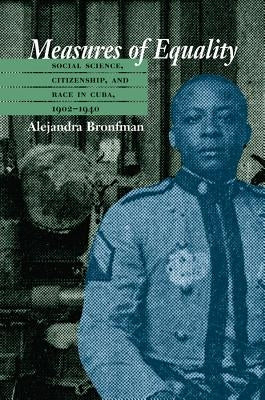
In the years following Cuba's independence, nationalists aimed to transcend racial categories in order to create a unified polity, yet racial and cultural heterogeneity posed continual challenges to these liberal notions of citizenship. Alejandra Bronfman traces the formation of Cuba's multiracial legal and political order in the early Republic by exploring the responses of social scientists, such as Fernando Ortiz and Israel Castellanos, and black and mulatto activists, including Gustavo Urrutia and Nicolas Guillen, to the paradoxes of modern nationhood.
Law, science, and the social sciences--which, during this era, enjoyed growing status in Cuba as well as in many other countries--played central roles in producing knowledge and shaping social categories in postindependence Cuba. Anthropologists, criminologists, and eugenicists embarked on projects intended to employ the tools of science to rid Cuba of the last vestiges of a colonial past. Meanwhile, the legal arena created both new freedoms and new modes of repression. Black and mulatto intellectuals and activists, working to ensure that citizenship offered concrete advantages rather than empty promises, appropriated changing social scientific and legal categories and turned them to their own uses. In the midst of several decades of intermittent racial violence and expanding social and political mobilization by Cubans of African descent, debates among intellectuals and activists, state officials, and legislators transformed not only understandings of race, but also the terms of citizenship for all Cubans.
Author: Alejandra M. Bronfman
Publisher: University of North Carolina Press
Published: 11/01/2004
Pages: 234
Binding Type: Paperback
Weight: 0.84lbs
Size: 9.30h x 6.22w x 0.65d
ISBN: 9780807855638
Review Citation(s):
Choice 06/01/2005 pg. 1879
Law, science, and the social sciences--which, during this era, enjoyed growing status in Cuba as well as in many other countries--played central roles in producing knowledge and shaping social categories in postindependence Cuba. Anthropologists, criminologists, and eugenicists embarked on projects intended to employ the tools of science to rid Cuba of the last vestiges of a colonial past. Meanwhile, the legal arena created both new freedoms and new modes of repression. Black and mulatto intellectuals and activists, working to ensure that citizenship offered concrete advantages rather than empty promises, appropriated changing social scientific and legal categories and turned them to their own uses. In the midst of several decades of intermittent racial violence and expanding social and political mobilization by Cubans of African descent, debates among intellectuals and activists, state officials, and legislators transformed not only understandings of race, but also the terms of citizenship for all Cubans.
Author: Alejandra M. Bronfman
Publisher: University of North Carolina Press
Published: 11/01/2004
Pages: 234
Binding Type: Paperback
Weight: 0.84lbs
Size: 9.30h x 6.22w x 0.65d
ISBN: 9780807855638
Review Citation(s):
Choice 06/01/2005 pg. 1879
About the Author
Alejandra Bronfman is assistant professor of history at the University of British Columbia.
Share