Johns Hopkins University Press
Mother of the Gods: From Cybele to the Virgin Mary
Mother of the Gods: From Cybele to the Virgin Mary
Couldn't load pickup availability
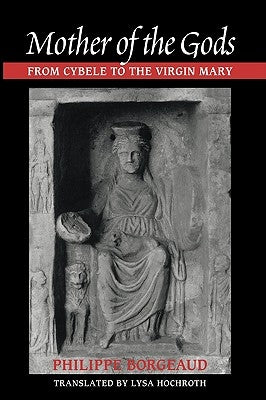
Worshiped throughout the ancient Mediterranean world, the Mother of the Gods was known by a variety of names. Among peoples of Asia Minor, where her cult first began, she often shared the names of local mountains. The Greeks commonly called her Cybele, the name given to her by the Phrygians of Asia Minor, and identified her with their own mother goddesses Rhea, Gaia, and Demeter. The Romans adopted her worship at the end of the Second Punic War and called her Mater Magna, Great Mother. Her cult became one of the three most important mystery cults in the Roman Empire, along with those of Mithras and Isis. And as Christianity took hold in the Roman world, ritual elements of her cult were incorporated into the burgeoning cult of the Virgin Mary.
In Mother of the Gods, Philippe Borgeaud traces the journey of this divine figure through Asia Minor, Greece, and Rome between the sixth century B.C. and the fourth century A.D. He examines how the Mother of the Gods was integrated into specific cultures, what she represented to those who worshiped her, and how she was used as a symbol in art, myth, and even politics. The Mother of the Gods was often seen as a dualistic figure: ancestral and foreign, aristocratic and disreputable, nurturing and dangerous. Borgeaud's challenging and nuanced portrait opens new windows on the ancient world's sophisticated religious beliefs and shifting cultural identities.
Author: Philippe Borgeaud
Publisher: Johns Hopkins University Press
Published: 11/12/2004
Pages: 208
Binding Type: Hardcover
Weight: 1.05lbs
Size: 9.26h x 6.38w x 0.77d
ISBN: 9780801879852
Review Citation(s):
Choice 06/01/2005 pg. 1834
About the Author
Philippe Borgeaud is a professor of the history of religion at the University of Geneva and the author of several books, including The Cult of Pan in Ancient Greece.
This title is not returnable
Share