1
/
of
1
Omohundro Institute and University of North C
Motives of Honor, Pleasure, and Profit: Plantation Management in the Colonial Chesapeake, 1607-1763
Motives of Honor, Pleasure, and Profit: Plantation Management in the Colonial Chesapeake, 1607-1763
Regular price
$152.83 USD
Regular price
Sale price
$152.83 USD
Shipping calculated at checkout.
Quantity
Couldn't load pickup availability
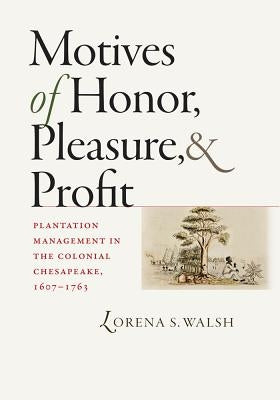
Lorena Walsh offers an enlightening history of plantation management in the Chesapeake colonies of Virginia and Maryland, ranging from the founding of Jamestown to the close of the Seven Years' War and the end of the Golden Age of colonial Chesapeake agriculture.
Walsh focuses on the operation of more than thirty individual plantations and on the decisions that large planters made about how they would run their farms. She argues that, in the mid-seventeenth century, Chesapeake planter elites deliberately chose to embrace slavery. Prior to 1763 the primary reason for large planters' debt was their purchase of capital assets--especially slaves--early in their careers. In the later stages of their careers, chronic indebtedness was rare.
Walsh's narrative incorporates stories about the planters themselves, including family dynamics and relationships with enslaved workers. Accounts of personal and family fortunes among the privileged minority and the less well documented accounts of the suffering, resistance, and occasional minor victories of the enslaved workers add a personal dimension to more concrete measures of planter success or failure.
Author: Lorena S. Walsh
Publisher: Omohundro Institute and University of North C
Published: 04/01/2010
Pages: 736
Binding Type: Hardcover
Weight: 2.65lbs
Size: 9.30h x 6.10w x 2.00d
ISBN: 9780807832349
Review Citation(s):
Choice 01/01/2011
Walsh focuses on the operation of more than thirty individual plantations and on the decisions that large planters made about how they would run their farms. She argues that, in the mid-seventeenth century, Chesapeake planter elites deliberately chose to embrace slavery. Prior to 1763 the primary reason for large planters' debt was their purchase of capital assets--especially slaves--early in their careers. In the later stages of their careers, chronic indebtedness was rare.
Walsh's narrative incorporates stories about the planters themselves, including family dynamics and relationships with enslaved workers. Accounts of personal and family fortunes among the privileged minority and the less well documented accounts of the suffering, resistance, and occasional minor victories of the enslaved workers add a personal dimension to more concrete measures of planter success or failure.
Author: Lorena S. Walsh
Publisher: Omohundro Institute and University of North C
Published: 04/01/2010
Pages: 736
Binding Type: Hardcover
Weight: 2.65lbs
Size: 9.30h x 6.10w x 2.00d
ISBN: 9780807832349
Review Citation(s):
Choice 01/01/2011
About the Author
Walsh, Lorena S.: - Lorena S. Walsh was for twenty-seven years a historian at the Colonial Williamsburg Foundation. She is author of From Calabar to Carter's Grove: The History of a Virginia Slave Community and coauthor of Robert Cole's World: Agriculture and Society in Early Maryland(UNC Press).
Share