1
/
of
1
Cambridge University Press
Open Access and the Humanities: Contexts, Controversies and the Future
Open Access and the Humanities: Contexts, Controversies and the Future
Regular price
$97.83 USD
Regular price
Sale price
$97.83 USD
Shipping calculated at checkout.
Quantity
Couldn't load pickup availability
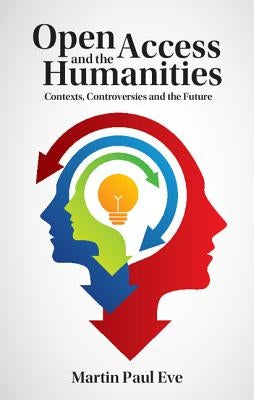
If you work in a university, you are almost certain to have heard the term 'open access' in the past couple of years. You may also have heard either that it is the utopian answer to all the problems of research dissemination or perhaps that it marks the beginning of an apocalyptic new era of 'pay-to-say' publishing. In this book, Martin Paul Eve sets out the histories, contexts and controversies for open access, specifically in the humanities. Broaching practical elements alongside economic histories, open licensing, monographs and funder policies, this book is a must-read for both those new to ideas about open-access scholarly communications and those with an already keen interest in the latest developments for the humanities. This title is also available as Open Access via Cambridge Books Online.
Author: Martin Paul Eve
Publisher: Cambridge University Press
Published: 11/27/2014
Pages: 226
Binding Type: Hardcover
Weight: 0.90lbs
Size: 8.50h x 5.50w x 0.56d
ISBN: 9781107097896
Author: Martin Paul Eve
Publisher: Cambridge University Press
Published: 11/27/2014
Pages: 226
Binding Type: Hardcover
Weight: 0.90lbs
Size: 8.50h x 5.50w x 0.56d
ISBN: 9781107097896
About the Author
Eve, Martin Paul: - Martin Paul Eve is a lecturer in English at the University of Lincoln and is the author of Pynchon and Philosophy (2014) and editor of the open access journal of Pynchon scholarship, Orbit. Eve is well known for his work on open access, which includes appearing as an expert witness before the UK House of Commons Select Committee BIS Inquiry into Open Access, being a steering-group member of the OAPEN-UK project and a member of the HEFCE Open Access Monographs Expert Reference Panel, and founding the Open Library of Humanities.
Share