Stanford University Press
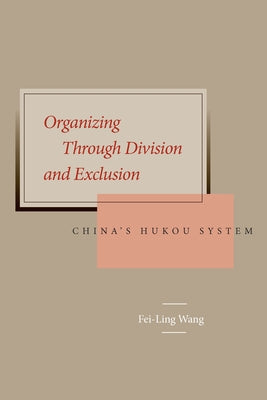
Organizing Through Division and Exclusion: China's Hukou System
Organizing Through Division and Exclusion: China's Hukou System
Couldn't load pickup availability
This book is the first comprehensive examination of China's hukou (household registration) system. The hukou system registers and governs the 1.3 billion Chinese, while creating deep and rigid divisions and exclusions; in many domains the system determines how the Chinese live and shapes China's sociopolitical structure and socioeconomic development. This book shows that the system has made both positive and negative contributions to contemporary Chinese society: it has helped foster rapid economic growth and political stability, but also has reinforced social stratification, the rural-urban divide, regional inequalities, and discrimination and injustice.
Using rich new materials, this book traces the history and development of the hukou system. It describes the functions, impact, and operational mechanisms of the system. It also analyzes the hukou in comparison with the systems of exclusion and discrimination in other nations, notably Brazil and India. This book presents important insights for understanding China's past, present, and future.
Author: Fei-Ling Wang
Publisher: Stanford University Press
Published: 01/05/2005
Pages: 320
Binding Type: Hardcover
Weight: 1.24lbs
Size: 9.34h x 6.30w x 0.94d
ISBN: 9780804750394
About the Author
Fei-ling Wang is Associate Professor at the Georgia Institute of Technology's Sam Nunn School of International Affairs. He has published two earlier books, Institutions and Institutional Change in China: Premodernity and Modernization (1998), and From Family to Market: Labor Allocation in Contemporary China (1998).
Share