1
/
of
1
Oxford University Press, USA
Philosophy, Rhetoric, and Thomas Hobbes
Philosophy, Rhetoric, and Thomas Hobbes
Regular price
$87.00 USD
Regular price
Sale price
$87.00 USD
Shipping calculated at checkout.
Quantity
Couldn't load pickup availability
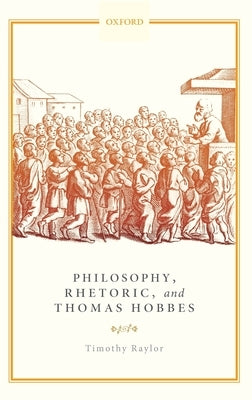
Thomas Hobbes claimed to have founded the discipline of civil philosophy (political science). The claim did not go uncontested and in recent years the relationship of philosophical reasoning to rhetorical persuasion in Hobbes's work has become a significant area of discussion, as scholars
attempt to align his disparaging remarks about rhetoric with his dazzling practice of it in works like Leviathan. The dominant view is that, having rejected an early commitment to humanism and with it rhetoric when he adopted the 'scientific' approach to philosophy in the late 1630s, Hobbes later
came to re-embrace it as an essential aid to or part of philosophy. Philosophy, Rhetoric, and Thomas Hobbes proposes that Hobbes was, from first to last, dubious about the place of rhetoric in civil society, and came to see it as a pernicious presence within philosophy - a position from which he
did not retreat. It offers a fresh and expanded picture of Hobbes's humanism by examining his years as a country house tutor; his teaching and his translation of Thucydides, the influence on him of Bacon, and the range of his early natural historical and philosophical interests. In demonstrating
the distinctively Aristotelian character of his understanding of rhetoric, the book also revisits the new approach to philosophy Hobbes adopted at the end of the 1630s, clarifying the nature and scope of his concern about the contamination of philosophy and political life by the procedures of
rhetorical argumentation.
Author: Timothy Raylor
Publisher: Oxford University Press, USA
Published: 01/15/2019
Pages: 352
Binding Type: Hardcover
Weight: 1.45lbs
Size: 9.30h x 6.50w x 1.10d
ISBN: 9780198829690
Review Citation(s):
Choice 06/01/2019
before taking up a position in the English Department of Carleton College, Minnesota, where he has taught since 1992. He has worked widely on early modern intellectual and cultural history, and is currently completing (with Stephen Clucas) an edition of Hobbes's De corpore and related manuscripts
for the Clarendon Edition of the works of Thomas Hobbes. He serves on the editorial boards of Hobbes Studies, Marvell Studies, and The Seventeenth Century.
attempt to align his disparaging remarks about rhetoric with his dazzling practice of it in works like Leviathan. The dominant view is that, having rejected an early commitment to humanism and with it rhetoric when he adopted the 'scientific' approach to philosophy in the late 1630s, Hobbes later
came to re-embrace it as an essential aid to or part of philosophy. Philosophy, Rhetoric, and Thomas Hobbes proposes that Hobbes was, from first to last, dubious about the place of rhetoric in civil society, and came to see it as a pernicious presence within philosophy - a position from which he
did not retreat. It offers a fresh and expanded picture of Hobbes's humanism by examining his years as a country house tutor; his teaching and his translation of Thucydides, the influence on him of Bacon, and the range of his early natural historical and philosophical interests. In demonstrating
the distinctively Aristotelian character of his understanding of rhetoric, the book also revisits the new approach to philosophy Hobbes adopted at the end of the 1630s, clarifying the nature and scope of his concern about the contamination of philosophy and political life by the procedures of
rhetorical argumentation.
Author: Timothy Raylor
Publisher: Oxford University Press, USA
Published: 01/15/2019
Pages: 352
Binding Type: Hardcover
Weight: 1.45lbs
Size: 9.30h x 6.50w x 1.10d
ISBN: 9780198829690
Review Citation(s):
Choice 06/01/2019
About the Author
Timothy Raylor, Professor of English, Carleton College
before taking up a position in the English Department of Carleton College, Minnesota, where he has taught since 1992. He has worked widely on early modern intellectual and cultural history, and is currently completing (with Stephen Clucas) an edition of Hobbes's De corpore and related manuscripts
for the Clarendon Edition of the works of Thomas Hobbes. He serves on the editorial boards of Hobbes Studies, Marvell Studies, and The Seventeenth Century.
Share