Independently Published
Plane Language: The Alternative Dictionary of Aviation
Plane Language: The Alternative Dictionary of Aviation
Couldn't load pickup availability
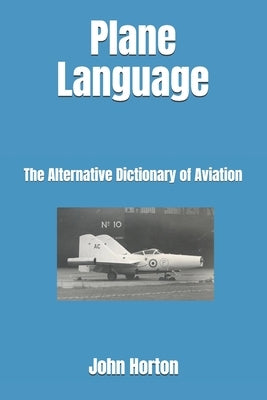
In RAF banter and slang (as memorably lampooned by Monty Python) what were Kipper Kites, Hairy Legs, Prangs, Going For a Burton & Mae Wests ? What does Air Force One really mean, and how did the term come about? Did president Johnson really fluff his lines when unveiling the Mach 3 Blackbird spy plane, and how did a typist come to change the title of a multi-Billion Pound international helicopter project? Why did the UK and France bicker over the spelling of Concorde, and what might the ever-controversial BAC TSR-2 have been called if it had entered RAF service? How genuine are such widely-quoted nicknames as Jump Jet, Fork-Tailed Devil & Whistling Death, and how did they come about? Which classic aircraft were nearly named Shrew, Satan, or Albion, and what did the Spitfire's designer really want to call it? Which famous (some say infamous) American jet fighter had a rock album written around it? Where in the RAF was Albert Square and how did an American aircraft carrier come to be called John's Sore Penis ? Which airliners were nicknamed the Playtex Jet (after the bra) the Stratoboozer or the Barbie Jet and why might cabin crew brand you a "Phillip" or a "Bob"? In Britain, what was the Rutland Reindeer, the Mayfield Kestrel & the Ridgefield Prometheus, and what was the hush-hush Vennet fighter? (see cover)
Part One explores the whole language and culture of aviation, from the birth of the very word aeroplane itself (and why Americans prefer airplane) to the origins and meanings of such terms as Blimp, Flak, Chaff, Archie, Balbo & Guzomee Bird. Part Two comprises over a thousand separate entries, is packed with fun facts and anecdotes, and examines aviation nicknames and colloquial terms, changed names, fictional names, and the names of rare and lesser-known variants. Part Three examines American naming policies, why so many followed British practice, and how they only really came into their own after Pearl Harbor. Part Four picks apart the successive byzantine British naming systems that gave rise to such titles as English Electric Eclectic and Boulton & Paul Bobolink, and saw fighters bizarrely named after game birds . Part Five describes the complex Japanese aircraft naming/designation systems, and how a group of Americans in Australia came up with WWII reporting names like "Betty, Mavis & Frank" that we still use today. Part Six is arguably the the most comprehensive listing to date of Western/NATO reporting names for Soviet & Chinese aircraft, exploring the methodology behind such weird names as Fagot & Frogfoot, Cock & Cookpot. And what was the Fearless? Plane Language is an aviation book like no other, both informative and entertaining; a book that you will delve into over and over again. (Includes some historic language and/or cultural stereotypes that may be inconsistent with today's standards.)Author: John Horton
Publisher: Independently Published
Published: 01/26/2024
Pages: 298
Binding Type: Paperback
Weight: 0.88lbs
Size: 9.00h x 6.00w x 0.62d
ISBN: 9798873963249
This title is not returnable
Share