1
/
of
1
Cambridge University Press
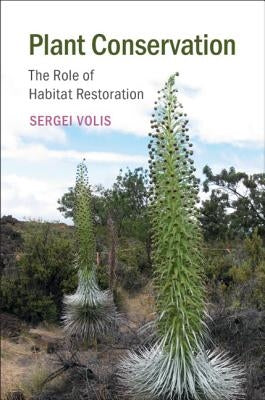
Plant Conservation: The Role of Habitat Restoration
Plant Conservation: The Role of Habitat Restoration
Regular price
$194.06 USD
Regular price
Sale price
$194.06 USD
Shipping calculated at checkout.
Quantity
Couldn't load pickup availability
The rate of species and natural habitat loss across our planet is steadily accelerating. This book argues that existing practises of plant conservation are inadequate and firmly supports the placement of ecological restoration at the cornerstone of biodiversity conservation. The author unifies different aspects of conservation into one coherent concept, including natural area protection, ex situ conservation and in situ interventions through either population management or ecological restoration. Assisted colonization, experimentation, and utilization of threatened plant species are raised as crucial elements in restoration, with partly novel ecosystems being among its major target areas. Covering a wide spectrum of plant conservation examples, and offering practical methodologies alongside the theoretical context, this is a vital resource for students, research scientists and practitioners in conservation biology and restoration ecology.
Author: Sergei Volis
Publisher: Cambridge University Press
Published: 03/07/2019
Pages: 494
Binding Type: Hardcover
Weight: 2.10lbs
Size: 9.30h x 8.50w x 1.10d
ISBN: 9781108480376
Review Citation(s):
Choice 05/01/2020
Author: Sergei Volis
Publisher: Cambridge University Press
Published: 03/07/2019
Pages: 494
Binding Type: Hardcover
Weight: 2.10lbs
Size: 9.30h x 8.50w x 1.10d
ISBN: 9781108480376
Review Citation(s):
Choice 05/01/2020
About the Author
Volis, Sergei: - Sergei Volis is Professor of Biology at Kunming Institute of Botany, Chinese Academy of Sciences, Beijing. He has authored many publications investigating genetic and demographic population processes, plant adaptations to local environments, initial stages of speciation and species phylogeography. His major research interest is plant conservation in its theoretical and applied aspects, an interest which goes back to his years of studying ecology at Simpheropol State University in the former Soviet Union and his Ph.D. project at Ben-Gurion University of the Negev, Israel.
Share