1
/
of
1
Duke University Press
Punishment in Paradise: Race, Slavery, Human Rights, and a Nineteenth-Century Brazilian Penal Colony
Punishment in Paradise: Race, Slavery, Human Rights, and a Nineteenth-Century Brazilian Penal Colony
Regular price
$33.95 USD
Regular price
Sale price
$33.95 USD
Shipping calculated at checkout.
Quantity
Couldn't load pickup availability
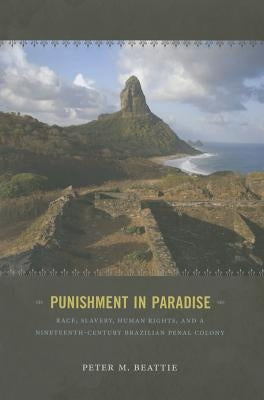
Throughout the nineteenth century the idyllic island of Fernando de Noronha, which lies two hundred miles off Brazil's northeastern coast, was home to Brazil's largest forced labor penal colony. In Punishment in Paradise Peter M. Beattie uses Noronha as a case study to understand nineteenth-century Brazil's varied social and cultural values, especially in relation to justice, class, color, civil condition, human rights and labor. As Brazil's slave population declined after 1850, the use of colonial-era disciplinary practices at Noronha-such as flogging and forced labor-stoked anxieties about human rights and Brazil's international image. Beattie contends that the treatment of slaves, convicts, and other social categories subject to coercive labor extraction were interconnected and that reforms that benefitted one of these categories made them harder to deny to others. In detailing Noronha's history and the end of slavery as part of an international expansion of human rights, Beattie places Brazil firmly in the purview of Atlantic history.
Author: Peter M. Beattie
Publisher: Duke University Press
Published: 04/07/2015
Pages: 352
Binding Type: Paperback
Weight: 1.05lbs
Size: 8.90h x 6.00w x 0.70d
ISBN: 9780822358305
Author: Peter M. Beattie
Publisher: Duke University Press
Published: 04/07/2015
Pages: 352
Binding Type: Paperback
Weight: 1.05lbs
Size: 8.90h x 6.00w x 0.70d
ISBN: 9780822358305
About the Author
Peter M. Beattie is Associate Professor of History at Michigan State University. He is the author of The Tribute of Blood: Army, Honor, Race, and Nation in Brazil 1864-1945, also published by Duke University Press, and he has served as coeditor of the Luso Brazilian Review for the areas of history and social science since 2004.
Share