1
/
of
1
Oxford University Press, USA
Quality Peace: Peacebuilding, Victory and World Order
Quality Peace: Peacebuilding, Victory and World Order
Regular price
$50.95 USD
Regular price
Sale price
$50.95 USD
Shipping calculated at checkout.
Quantity
Couldn't load pickup availability
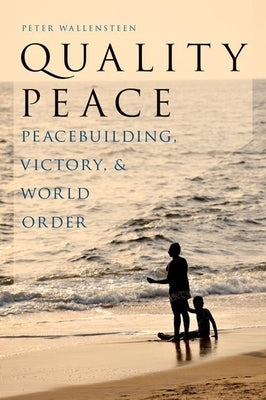
In Quality Peace, leading peace researcher Peter Wallensteen offers a broad analysis of peacebuilding, isolating what does and not work when settling conflicts. The book uses statistical analysis to compare two war outcomes-negotiated settlement and victory- in the post-Cold War era.
Wallensteen finds that if peace is to last, three conditions must be met: a losing party must retain its dignity; security and the rule of law must be ensured for all; and the time horizon for the settlement must be long enough to ensure a sense of normalcy. Wallensteen breaks down the components of all of these conditions and applies them to interstate conflicts, civil wars in which rebels are aiming to take over the entire state, and separatist rebellions. He also delves into the issue of world order and the significance of major power relations for
local peace efforts. Thus, the work provides a remarkable understanding of how different types of war outcomes deal with post-war conditions. Sharply argued and comprehensive, Quality Peace will invigorate peace research and stimulate peace practice, becoming an authoritative work in the field.
Author: Peter Wallensteen
Publisher: Oxford University Press, USA
Published: 10/06/2015
Pages: 272
Binding Type: Paperback
Weight: 0.80lbs
Size: 9.10h x 6.00w x 0.80d
ISBN: 9780190215552
Review Citation(s):
Choice 05/01/2016
Wallensteen finds that if peace is to last, three conditions must be met: a losing party must retain its dignity; security and the rule of law must be ensured for all; and the time horizon for the settlement must be long enough to ensure a sense of normalcy. Wallensteen breaks down the components of all of these conditions and applies them to interstate conflicts, civil wars in which rebels are aiming to take over the entire state, and separatist rebellions. He also delves into the issue of world order and the significance of major power relations for
local peace efforts. Thus, the work provides a remarkable understanding of how different types of war outcomes deal with post-war conditions. Sharply argued and comprehensive, Quality Peace will invigorate peace research and stimulate peace practice, becoming an authoritative work in the field.
Author: Peter Wallensteen
Publisher: Oxford University Press, USA
Published: 10/06/2015
Pages: 272
Binding Type: Paperback
Weight: 0.80lbs
Size: 9.10h x 6.00w x 0.80d
ISBN: 9780190215552
Review Citation(s):
Choice 05/01/2016
About the Author
Peter Wallensteen is a pioneer in peace research, having worked in the field since the 1960s, and Since 2006 is Richard G. Starmann Sr. Research Professor of Peace Studies at the Kroc Institute at the University of Notre Dame. He was a founder of the Department of Peace and Conflict Research at
Uppsala University and the first holder of the Dag Hammarskjöld chair in peace research in Sweden in 1985. He directed the Uppsala Conflict Data Program, which has become a leading provider of data on armed conflict and other forms of organized violence around the world.
Share